

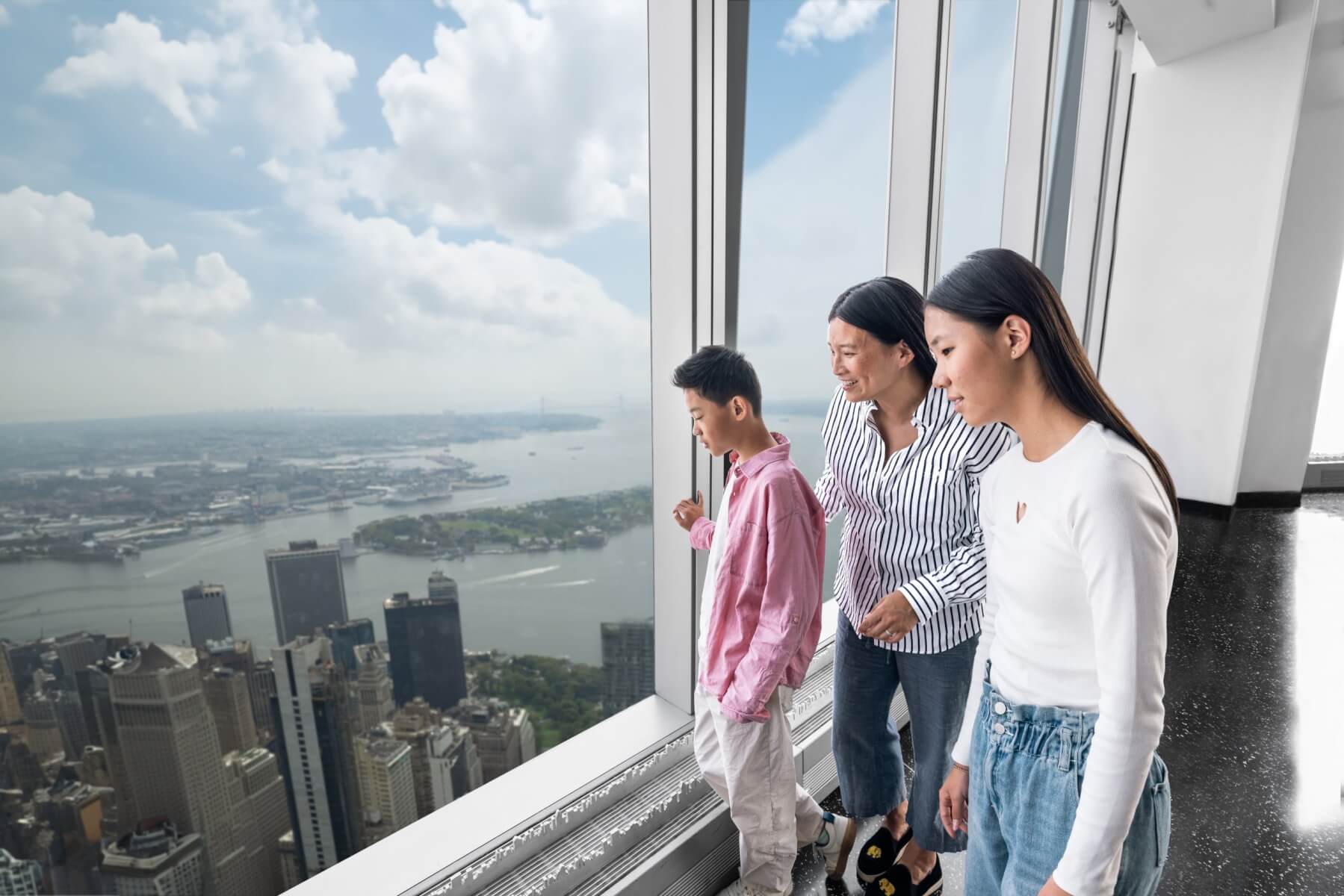

Category: Travel & Experiences
Meta description
One World Observatory tickets explained: compare entry options, tech features, best visit times, and planning tips. Click to read the full guide.
One World Observatory, decoded: why this observation deck feels different
One World Observatory is often described in superlatives, and not without reason. It sits atop One World Trade Center, the tallest building in the Western Hemisphere at 1,776 feet (about 541 meters). But the real story is not just height. It is how the experience is engineered: the choreography of arrival, the way crowds are routed, and the use of immersive technology to turn a skyline view into something closer to a curated, high-performance exhibit.
For FashionTimesGlobal readers, the appeal is both aesthetic and practical. You get a clean, modern interior, floor-to-ceiling glass, and a visual sweep that flatters everything from skyline photography to a polished travel itinerary. Yet behind that elegance is a set of operational choices that affect what you pay, how long you wait, and what you actually do once you are inside.
This guide merges the emotional pull of the view with a technical breakdown of how One World Observatory works, how the ticket tiers differ, and how it compares with other major New York observation decks.
The building facts that shape the visit
Before ticket types and sunset strategies, it helps to understand the platform you are standing on. One World Trade Center was completed in 2014, and One World Observatory opened on May 29, 2015. The Observatory spans floors 100, 101, and 102, with the primary observation level at roughly 1,250 feet above street level. That elevation is not a footnote: it changes the geometry of your view. Landmarks like the Statue of Liberty, the harbor, and the bridges read more clearly from Lower Manhattan than they do from Midtown.
Key specifications and data points
- Total building height: 1,776 ft (541.3 m) including antenna
- Observatory floors: 100, 101, 102
- Main viewing elevation: approximately 1,250 ft above ground
- SkyPod elevators: ascend 102 floors in about 47 seconds
- SkyPod technology: LED panels show a time-lapse of NYC’s skyline evolution from the 1500s to today
- Visibility: up to 45 miles on a clear day, spanning parts of four states
- Estimated annual visitors: about 3.3 million, roughly 9,000 guests per day on average
Editorial perspective: The most underrated feature is not the height. It is the pacing. One World Observatory is designed like a sequence: compression in the elevator, reveal in the theater, then expansion into the panoramic floors. That rhythm is why it feels cinematic even when you arrive tired, late, or in a crowd.
The arrival system: SkyPod elevators and “designed anticipation”
The SkyPod elevator ride is a technical centerpiece, not a simple transit mechanism. The ascent is fast enough to feel dramatic and controlled enough to feel safe. The walls function as synchronized LED screens that animate centuries of urban transformation. In practical terms, this does two things: it occupies attention during a necessary wait, and it sets a narrative frame before the view appears. That narrative matters because it makes the skyline feel earned rather than simply delivered.
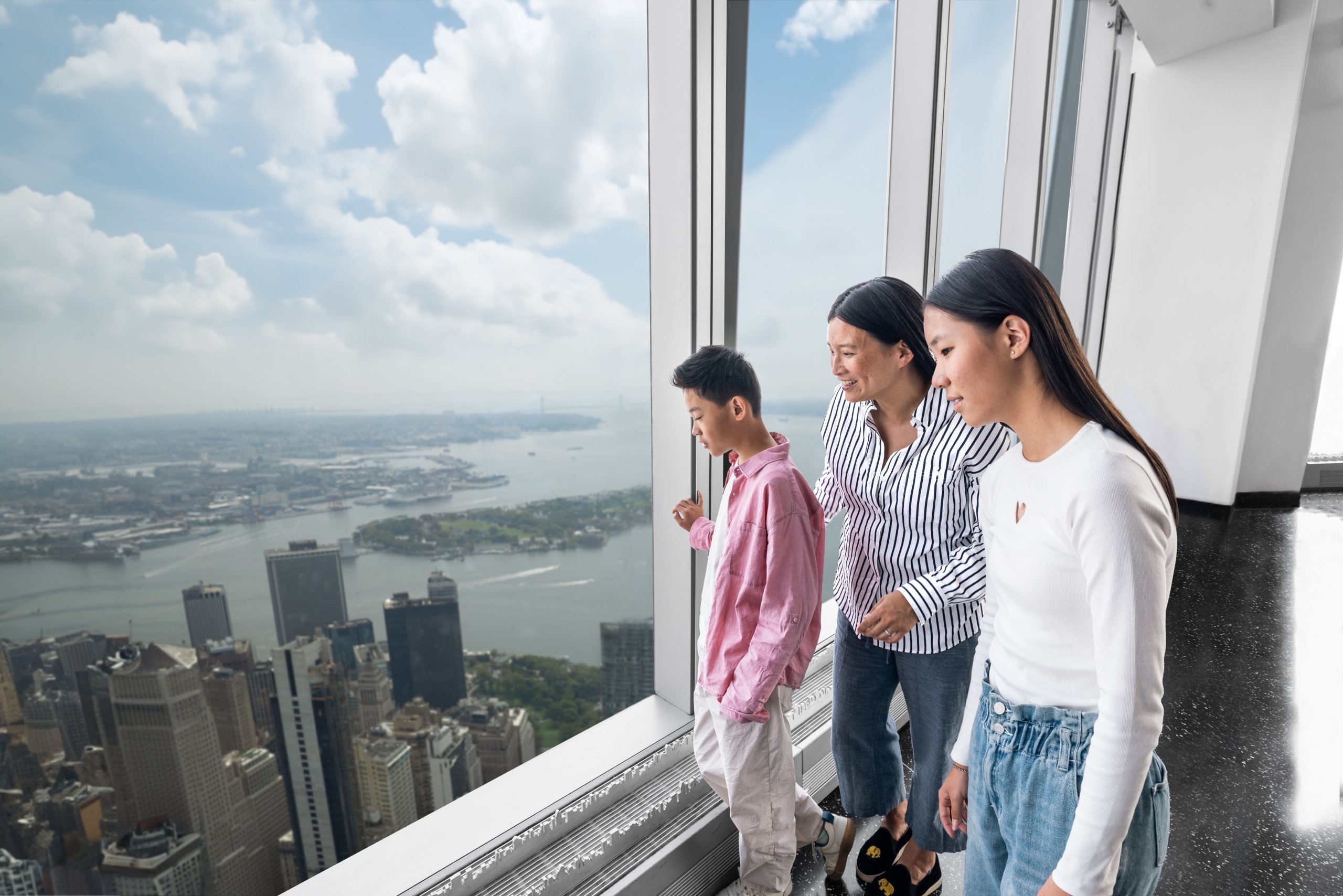
Family-friendly design meets serious skyline scale from the main viewing areas.
Ticket tiers: what changes, what stays the same
One World Observatory typically offers tiered ticketing that segments visitors by two variables: time flexibility and queue priority. The core content of the visit remains consistent: you still get the elevator sequence, the multi-floor experience, and the main observation deck. The premium is usually about convenience, not “more view.”
Ticket comparison table
| Feature | Standard All-Inclusive | Combination | Priority or Flex |
|---|---|---|---|
| Observatory access (floors 100-102) | Yes | Yes | Yes |
| Timed entry | Required | Required | More flexible entry |
| Skip-the-line | No | No | Yes |
| Bundled attractions | No | Yes (varies) | No |
| Best for | Value-focused planners | Multi-attraction itineraries | Peak season and tight schedules |
If you are choosing analytically, start with your constraints. If your day is rigid and your tolerance for waiting is low, Priority or Flex style options can be the rational purchase, especially in summer and during holiday weeks. If your schedule is open, the Standard All-Inclusive tier often delivers the best cost-to-experience ratio.
Check Ticket Options and Entry Times
The three-floor layout: what you actually do on each level
One World Observatory feels more spacious than many decks because it distributes people across multiple floors with distinct purposes. That separation is not just architectural. It is operational, keeping the main viewing areas from becoming a single congested platform.
Floor 100: See Forever Theater and the first reveal
After the elevator, guests enter a theater sequence that culminates in a dramatic skyline reveal. The technical point here is “controlled reveal.” It is a classic museum technique applied to a tourist attraction, and it works because it shifts your attention from the mechanics of arrival to the emotion of arrival.
Floor 101: social and dining layer, plus Sky Portal
Floor 101 houses dining and lounge-style spaces, including ONE Dine and ONE Mix. It is also where you find Sky Portal, a 14-foot circular disc displaying real-time video of the streets far below. The installation is effective because it creates a physical sensation: your body reads the depth even if your mind knows it is a screen.

Dining at altitude adds a second dimension to the visit: time and taste, not only views.
Floor 102: the main observation deck and City Pulse
This is the primary viewing level with 360-degree, floor-to-ceiling glass. Interactive City Pulse screens help visitors identify neighborhoods and landmarks. From a user-experience perspective, City Pulse reduces a common problem: the skyline is beautiful, but it can be hard to interpret without context. The screens turn “looking” into “understanding,” which extends how long people stay engaged.

Competitive positioning: how it stacks up against other NYC decks
New York’s observation deck landscape is crowded, and comparisons are unavoidable. The cleanest way to evaluate is by height, outdoor access, and the kind of view you want: Midtown icons or harbor and Lower Manhattan landmarks.
Comparison snapshot
| Metric | One World Observatory | Empire State Building (86th Floor) | Edge at Hudson Yards |
|---|---|---|---|
| Viewing height | About 1,250 ft | About 1,050 ft | About 1,131 ft |
| Outdoor deck | No (enclosed) | Yes | Yes |
| Signature tech | SkyPod, Sky Portal, City Pulse | Exhibits and heritage focus | Angled glass and thrill design |
| Neighborhood | Financial District | Midtown | West Side |
| View emphasis | Harbor, bridges, Lower Manhattan | Midtown skyline, Central Park | Hudson River, Midtown angles |
The analytical takeaway is simple: One World Observatory wins on elevation and integrated tech. It loses, depending on your preference, on outdoor access. If open air is non-negotiable, you may prefer a different deck. If weather-proof comfort and modern presentation matter, One World Observatory is a strong fit.
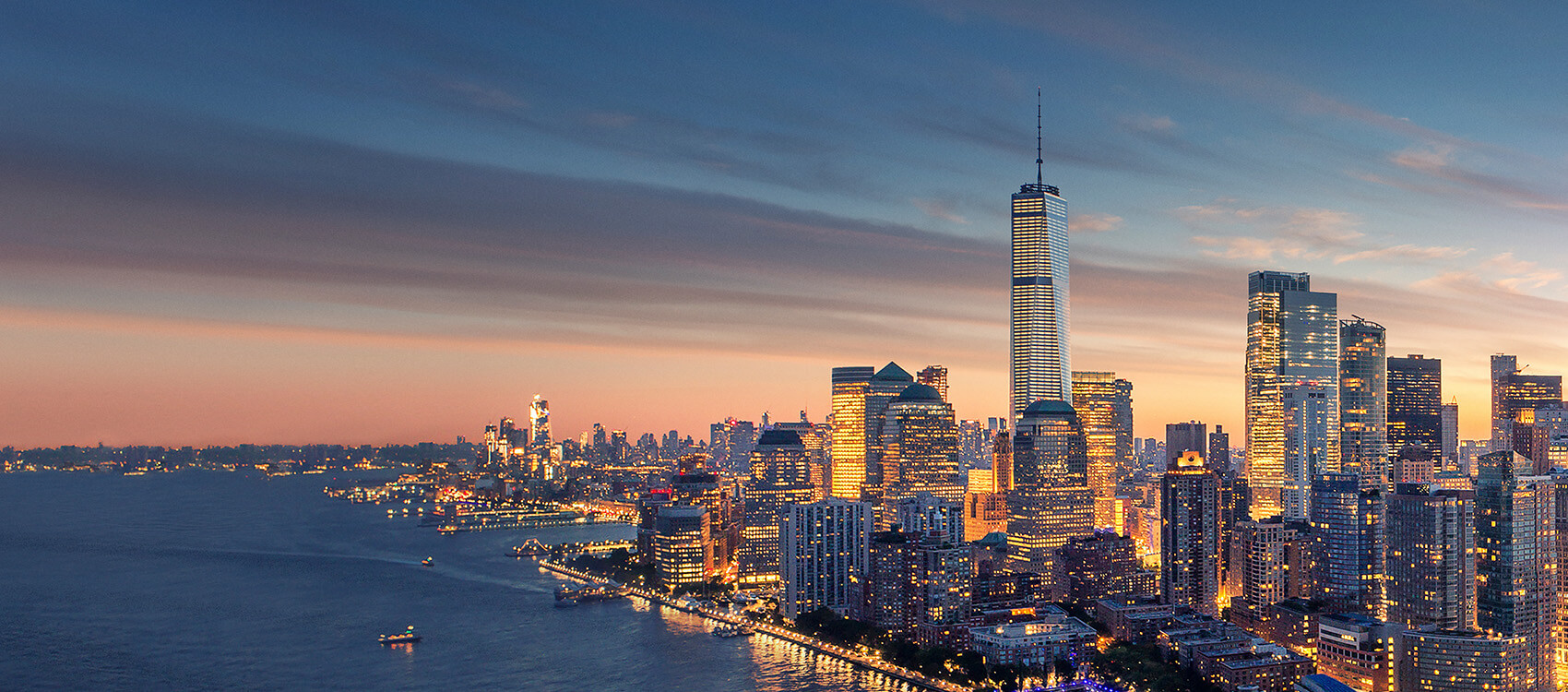
Premium packages lean into timing and atmosphere, especially after dark.
Pros and cons: the honest ledger
Pros
- Elevation advantage: among the highest observation experiences in the city, with broad visibility on clear days.
- Immersive arrival: the SkyPod ride and reveal sequence make the visit feel designed, not incidental.
- Multi-floor flow: spreads crowds and creates different “moods” across levels.
- Lower Manhattan perspective: strong views of the harbor and iconic landmarks in that direction.
- Climate controlled: comfortable in winter, summer, and rainy weather.
Cons
- No outdoor deck: some travelers want wind, open air, and unobstructed glass-free photos.
- Peak crowd pressure: timed entry helps, but high season still increases waiting unless you buy priority access.
- Glass photography tradeoffs: reflections can be an issue at midday if you are shooting with a phone or without a lens hood.
Planning like a pro: timing, light, and crowd strategy
Most “best time to visit” advice is vague. Here is a more technical approach based on crowd behavior and light conditions.
When to go for the best experience
- Early morning (around 9:00 to 10:00 AM): typically lighter crowds and cleaner glass, with softer light for photos.
- Late evening: fewer families, more ambient city glow, and a calmer feel.
- Sunset: the most in-demand slot. Book well in advance if you want the transition from daylight to night.
Micro-tips that improve outcomes
- Arrive 15 minutes early to clear security without stress.
- Weekdays beat weekends for queue times and space near the windows.
- For photography, press your lens close to the glass and angle slightly to reduce reflections.

Experience add-ons: dining, groups, and guided formats
One World Observatory is often paired with dining or structured experiences, which can be especially useful if you are building a polished itinerary or coordinating a group. These formats tend to reduce decision fatigue: you do not have to improvise your next step once you arrive.
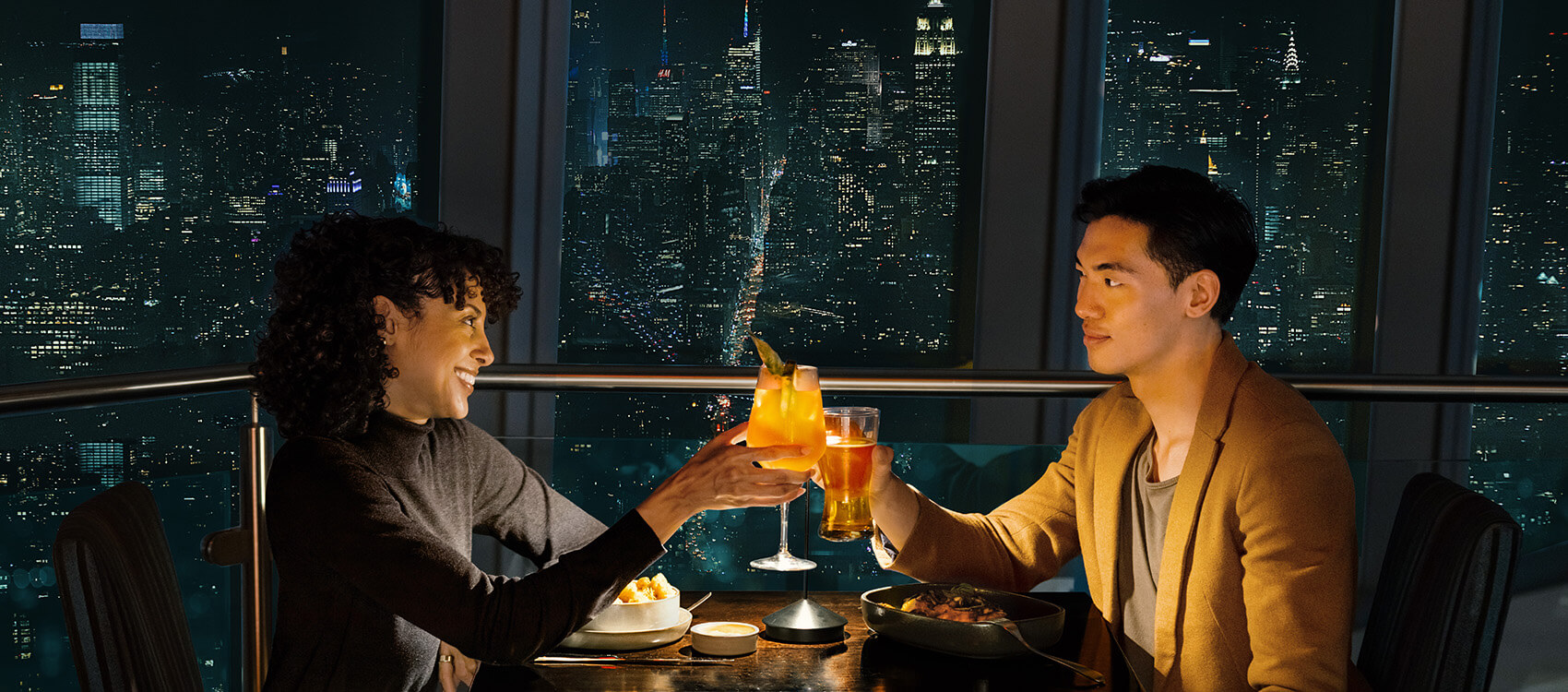
VIP and dining formats can streamline the visit and reduce friction during peak hours.
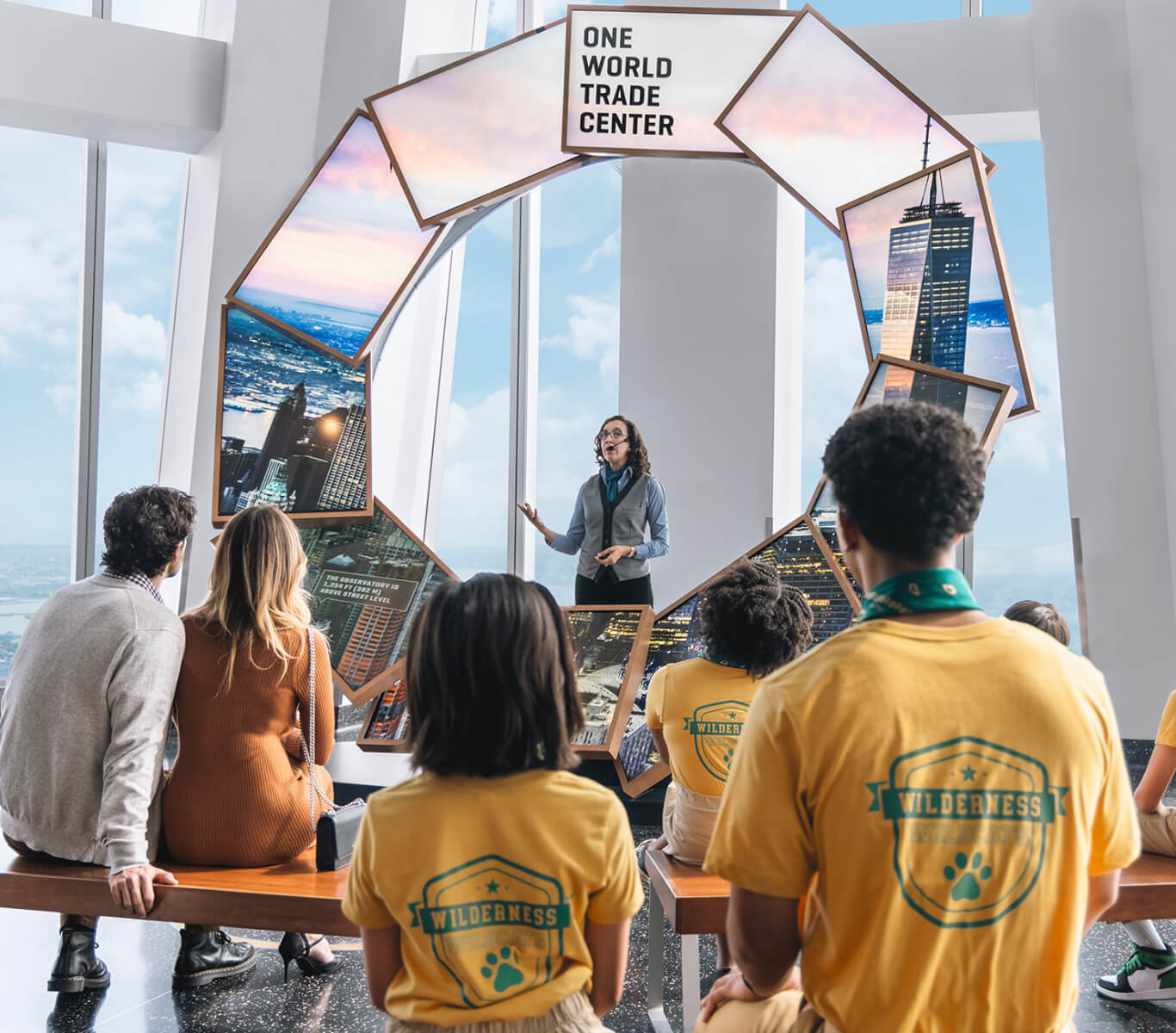
Group planning benefits from timed entry and structured packages.
For fashion and culture travelers, the practical benefit is control. You can align your visit with a dinner reservation, an event downtown, or a museum slot nearby without the uncertainty that comes with open-ended queues.
Explore Premium Experiences and Packages
Planning essentials: location, transit, and time on site
- Address: 117 West Street, New York, NY 10007 (entry via the World Trade Center area)
- Typical visit duration: about 1 to 2 hours
- Accessibility: ADA-compliant access across elevators and floors
Logistically, the Financial District location is a feature, not a flaw, if you plan around it. It pairs naturally with nearby downtown stops, including waterfront walks and major memorial sites. If you are staying in Midtown, budget transit time so you do not arrive rushed, especially for a timed entry ticket.
Conclusion: who One World Observatory is best for
One World Observatory is best understood as a modern, engineered skyline experience. It is built for visitors who want a high-impact view with minimal weather discomfort, plus technology that adds narrative and context. It is also a smart choice for travelers who care about design: the interiors are sleek, the pacing is deliberate, and the mood shifts elegantly from theater to gallery to panoramic calm.
If you want open-air adrenaline, another deck may suit you better. If you want a refined, high-elevation view with strong operational structure, One World Observatory is one of the most rational picks in New York.
Book One World Observatory Tickets
SEO slug suggestion: one-world-observatory-tickets-experience-guide