


Category: Travel & Experiences
Deconstructing One World Observatory: A Technical, Floor-by-Floor Guide to NYC’s Highest View
One World Observatory is often framed as a must-see for first-time visitors. That is true, but incomplete. The more precise description is this: it is a vertically staged experience built on a set of measurable engineering decisions, operational controls, and interactive systems that shape what you feel, how long you wait, and how clearly you understand the city below. In a skyline crowded with competitors, One World Observatory differentiates itself not only through elevation, but through sequencing. The visit is paced like a performance, using speed, light, and spatial design to turn a view into a narrative.
This professional guide breaks the experience down the way an analyst would: key specifications, elevator design, floor functions, ticket tier logic, and how it compares to other observation decks on the metrics that actually matter.
Meta description
One World Observatory tickets and experience explained: specs, elevator tech, floor-by-floor layout, ticket tiers, and comparison to other NYC decks. Click to read the full guide.
The structure in context: why the numbers change the experience
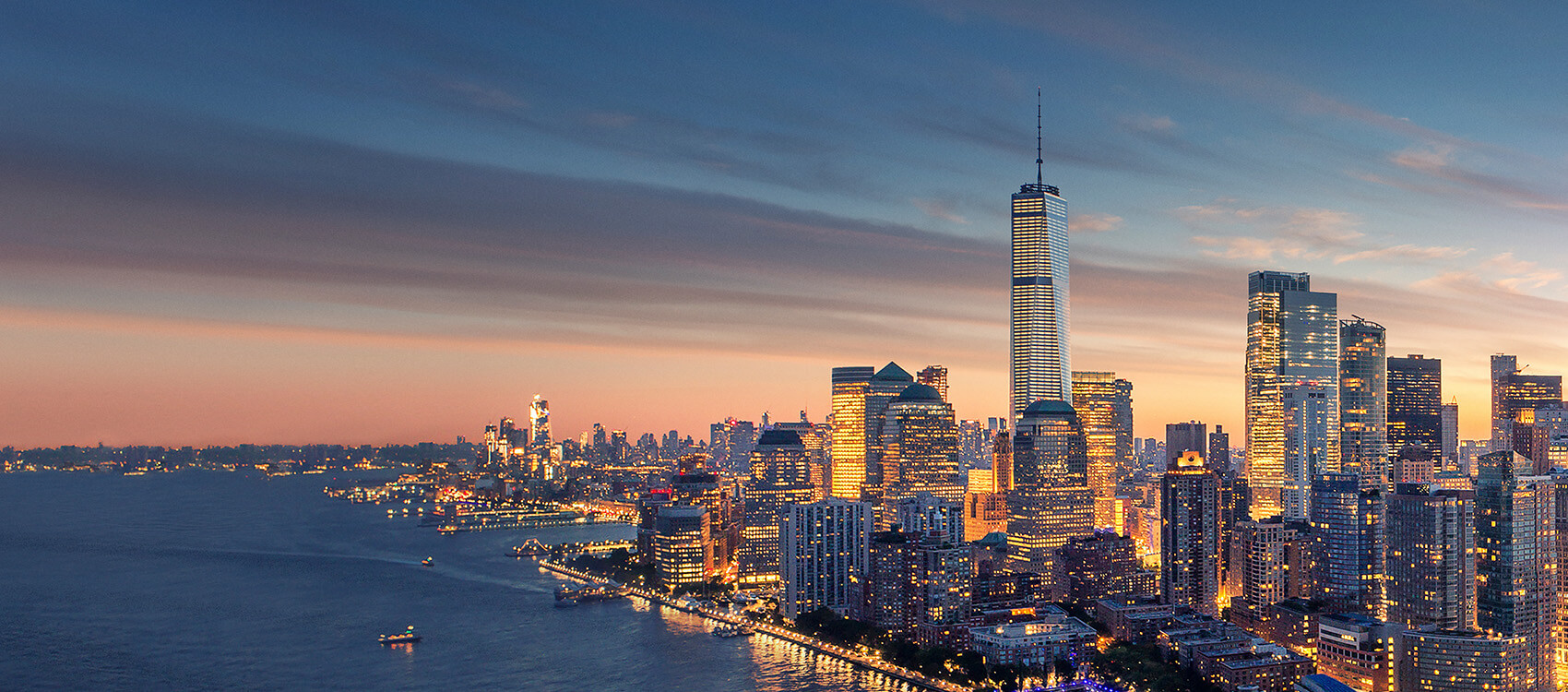
One World Trade Center rises to 1,776 feet (541.3 meters), making it the tallest building in the Western Hemisphere. The number is symbolic, but the impact is practical: height changes sightlines, the perceived scale of the harbor, and how landmarks align in the frame. The Observatory spans floors 100, 101, and 102, with the primary observation level at roughly 1,250 feet (381 meters) above street level.
That elevation advantage matters in two ways. First, it expands what is visually legible. On a clear day, the Observatory’s stated visibility reaches up to 45 miles, covering portions of four states. Second, it shifts the viewpoint toward Lower Manhattan’s defining icons: the Statue of Liberty, the Brooklyn Bridge, Governors Island, and the harbor’s geometry.

Verified specifications (visitor-relevant)
- Roof height: 1,368 ft (417 m)
- Total height (with antenna): 1,776 ft (541.3 m)
- Observatory floors: 100, 101, 102
- Main viewing elevation: approximately 1,250 ft (381 m)
- Construction completed: November 2014
- Observatory opened: May 29, 2015
- Clear-day visibility: up to 45 miles across four states
- Enclosure: floor-to-ceiling glass, 360-degree panoramic environment
- Estimated annual visitors: approximately 3.3 million (about 9,000 per day on average)
SkyPod elevators: turning logistics into a designed first act
Most observation decks treat the elevator ride as a necessary step, a short inconvenience. One World Observatory makes it the opening act. Its five SkyPod elevators rise 102 floors in about 47 seconds. At that pace, the ascent is fast enough to feel dramatic and slow enough to remain comfortable for most visitors.
The technical differentiator is the cab interior: LED wall panels display a time-lapse narrative of New York City’s skyline evolution, from the 1500s to the present day. The result is not merely entertainment. It is a cognitive primer. By the time the doors open, visitors have been given context and momentum, and the view feels like a reveal rather than a destination.
Expert framing: The SkyPod system is a classic example of experience engineering. It uses unavoidable dwell time to deliver story, then leverages that story to amplify the emotional impact of the first panoramic reveal.
Floor-by-floor analysis: three layers, three functions
One World Observatory’s spatial layout is a core reason it handles large volumes without feeling like a single crowded platform. Each floor has a distinct job, and that division improves flow, distributes attention, and makes it easier to build an itinerary that includes dining, a premium package, or group logistics.
Floor 100: arrival and cinematic reveal
After the elevators, visitors enter the See Forever Theater. The presentation culminates in a controlled reveal of the skyline. From a design standpoint, the theater compresses the environment, then releases it. That compression-release pattern is a proven way to heighten perceived scale.
Floor 101: interactive discovery and dining
Floor 101 functions as the experiential hub. This is where One World Observatory leans into interactive systems and hospitality. Two key features define this level:
- Sky Portal: a 14-foot diameter circular disc embedded in the floor that displays live, high-definition video of the streets below, creating an immediate sense of vertical distance.
- City Pulse: interactive stations that help visitors identify neighborhoods and landmarks in real time, turning a beautiful panorama into an understandable map.
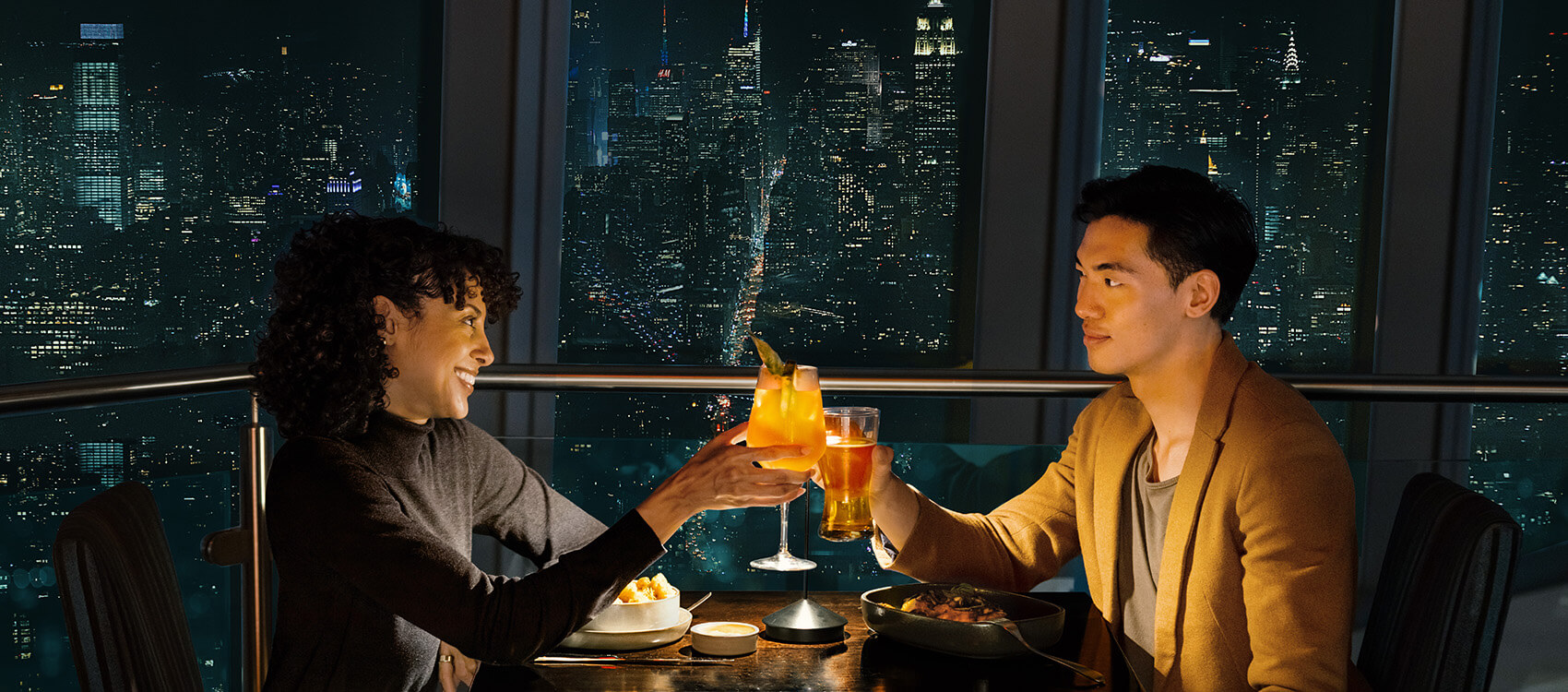
Floor 101 also hosts ONE Dine and ONE Mix, which changes the time economics of the visit. Instead of a quick up-and-down, visitors can extend their stay strategically, particularly during golden hour and early evening when the skyline shifts rapidly.

Floor 102: the primary observation level
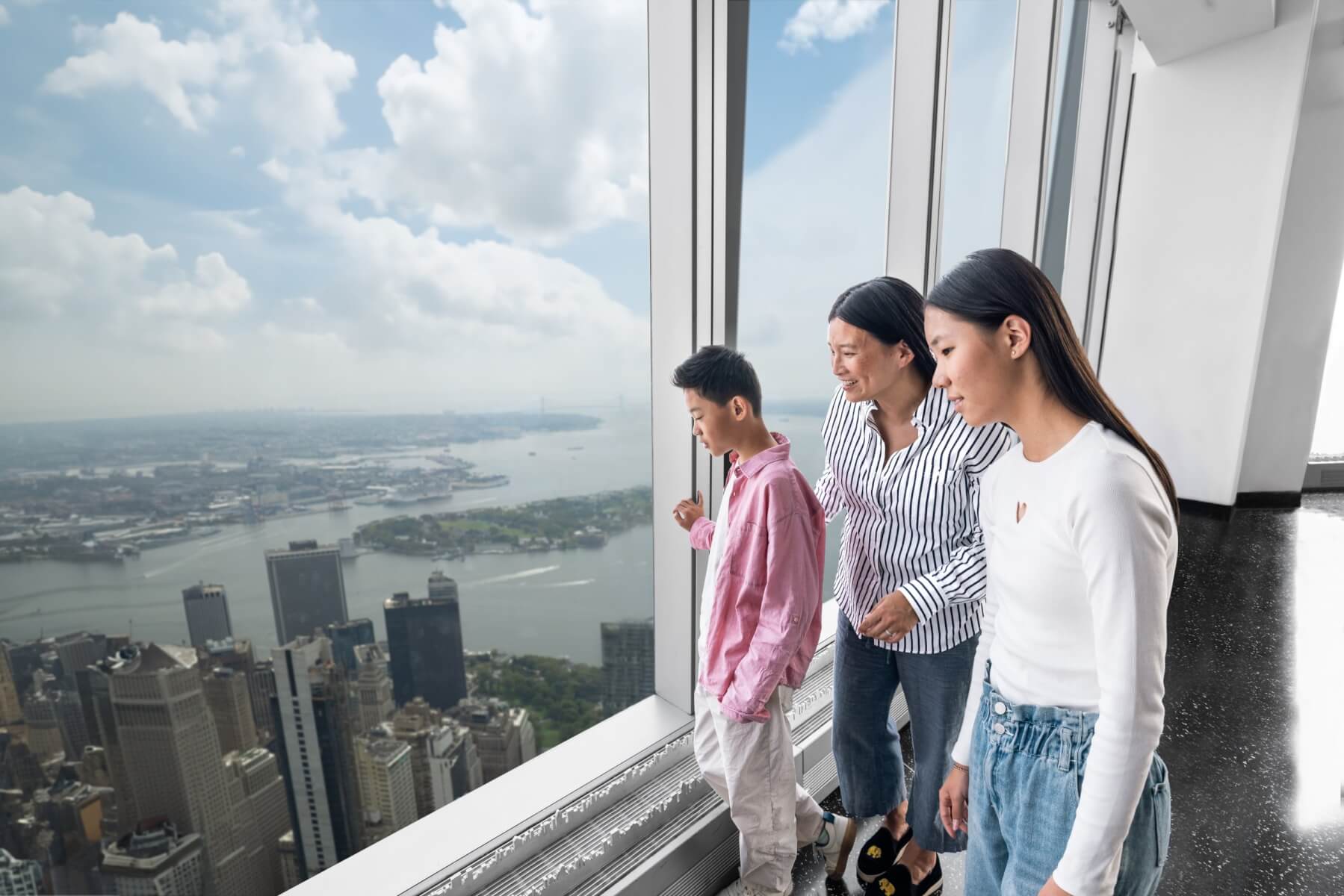
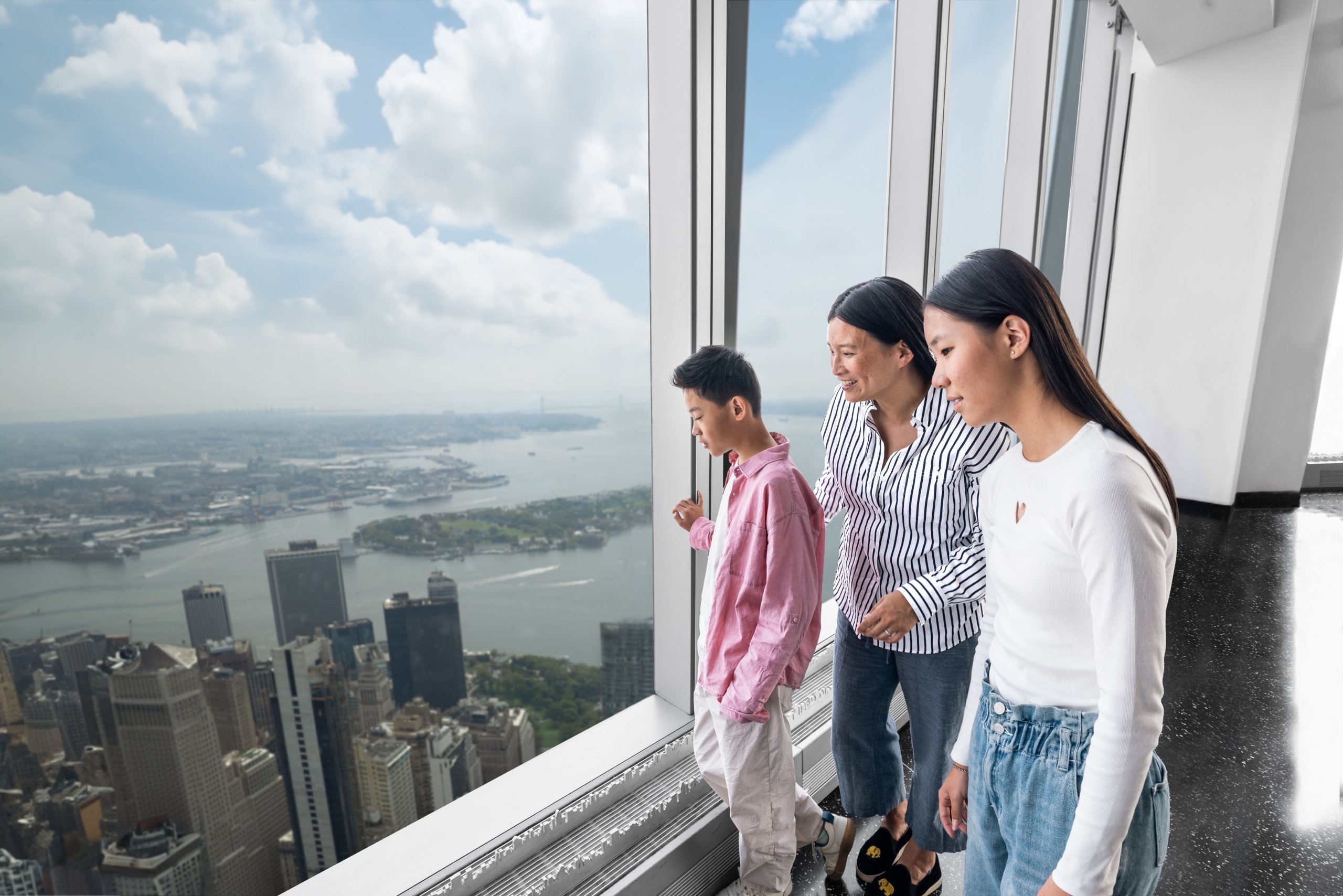
Floor 102 is the main viewing level, with unobstructed 360-degree windows. On clear days, visibility extends far beyond Manhattan, and the Lower Manhattan location offers a more direct relationship to the harbor and major bridges than Midtown decks typically provide.

Ticket architecture: what changes across tiers and what does not
Without scraped pricing data, specific dollar figures cannot be verified here. What can be analyzed reliably is the structure: One World Observatory uses tiered tickets to segment visitors by time flexibility, queue priority, and in some cases bundled combinations. Importantly, the core content is consistent. The elevator sequence, multi-floor access, Sky Portal, and main observation deck access are not typically withheld behind premium tiers. Premium tiers usually buy convenience.
Ticket comparison matrix
| Feature | All-Inclusive | Combination Tickets | Priority or Flex |
|---|---|---|---|
| Full Observatory access (floors 100-102) | Yes | Yes | Yes |
| SkyPod elevator experience | Yes | Yes | Yes |
| Sky Portal and City Pulse | Yes | Yes | Yes |
| Timed entry | Yes | Yes | More flexible window |
| Expedited entry | No | No | Yes |
| Bundled attractions | No | Yes (varies) | No |
| Best fit | Value-focused planners | Multi-attraction itineraries | Peak season, tight schedules |
Decision rule: If the day is fixed and you cannot risk long queues, Priority or Flex-style tickets are an operational hedge. If you have schedule elasticity, a standard timed ticket often provides the best efficiency per dollar spent.
Browse Ticket Tiers and Availability
Premium formats: when packages make logistical sense
For travelers building a structured itinerary, premium experiences can be less about luxury and more about reducing friction. Packages that combine timing, dining, or guided elements can stabilize the visit during high-demand hours, particularly around sunset.
Competitive landscape: how it compares to other NYC observation decks
New York has multiple observation decks, and each has a distinct value proposition. The cleanest comparison uses height, outdoor access, and experience design.
Technical comparison snapshot
| Metric | One World Observatory | Empire State Building (86th Floor) | Edge at Hudson Yards |
|---|---|---|---|
| Viewing elevation | About 1,250 ft | About 1,050 ft | About 1,131 ft |
| Open-air access | No (enclosed) | Yes | Yes |
| Signature experience design | SkyPod, Sky Portal, City Pulse | Legacy and exhibits | Thrill design and glass floor |
| Location | Financial District | Midtown | West Side |
Interpretation: One World Observatory is the strongest choice for visitors prioritizing height, immersive tech, and Lower Manhattan views. Competitors can win on open-air atmosphere or heritage value, but they do not replicate the same integrated, multi-floor narrative.
Pros and cons: an objective ledger
Pros
- Elevation advantage with broad visibility on clear days.
- Experience sequencing that amplifies the impact of the first reveal.
- Three-floor distribution that improves crowd flow and comfort.
- Interactive systems that add context beyond sightseeing.
- Climate-controlled environment that reduces weather risk.
Cons
- No outdoor deck for visitors who want open air and glass-free photos.
- Peak-season crowd pressure without expedited entry.
- Potential reflections on glass during harsh midday light.
Practical intelligence: how to optimize your visit
Even a perfectly designed attraction is sensitive to timing. The following strategies are based on how observation decks typically behave under demand and how light conditions affect glass viewing.
- Best low-crowd windows: roughly 9:00 to 10:00 AM and later evenings (often after 7:00 PM).
- Best light for photography: late afternoon into golden hour for warmer tones and reduced glare.
- Weekdays outperform weekends for queue length and window access.
- Arrive about 15 minutes early to clear security without compressing your schedule.
- Plan 60 to 90 minutes to experience all three floors at a comfortable pace.
Planning essentials: location and access
- Address: 117 West Street, New York, NY 10007 (entry via the World Trade Center campus area)
- Accessibility: ADA-compliant access across elevators and observation floors
Bottom line: what One World Observatory really sells
One World Observatory sells certainty in a city that often runs on improvisation. The view is the headline, but the differentiator is the engineered experience: a high-speed elevator narrative, a controlled reveal, interactive layers that explain what you are seeing, and a multi-floor layout that keeps the visit functional even at scale.
If you want open-air adrenaline, another deck may be a better match. If you want the highest, most technologically integrated, climate-controlled panorama in New York, One World Observatory is a rational, high-impact choice.

Plan Your Visit and Reserve Entry
SEO slug suggestion: deconstructing-one-world-observatory-technical-guide