


In Australia, “holiday styling” is not a winter vignette. It is a high-UV, high-heat, outdoor-forward season where design has to perform under pressure. That pressure is practical as much as it is aesthetic: guests arrive, cameras come out, and the entryway, terrace, balcony, or pool zone has to look intentional from the first moment to the last.
This is the context in which artificial topiary trees have become more than decorative filler. For designers, property managers, and homeowners who want consistency without horticultural risk, topiary is increasingly treated like an architectural element: a repeatable form that creates rhythm, symmetry, and polish. Designer Vertical Gardens, an Australian specialist in artificial greenery systems, sits at the premium end of this evolution. The brand’s focus is less about novelty shapes and more about specifications that determine long-term performance: UV resistance, foliage density, structural stability, and compatibility with modular green wall ecosystems.
What follows is a technical and analytical look at why artificial topiary works so well in the Australian climate, what separates specialist-grade products from mass-market alternatives, and how topiary can anchor a holiday-ready scheme that still looks composed months later.
The Australian climate problem artificial topiary solves
Live topiary is a classic design move, but Australia is not a forgiving environment for formal potted greenery. The variables that degrade live plants tend to peak in the same window as the summer holiday entertaining season.
- UV intensity: many Australian locations regularly experience extreme UV levels in summer. High UV accelerates leaf scorch and can quickly compromise the look of live boxwood and similar species when placed in exposed positions.
- Heat stress: potted plants are especially vulnerable because their root systems are limited and the pot medium heats up quickly.
- Water restrictions and logistics: consistent watering is not always simple during travel-heavy periods, and restrictions can reduce flexibility.
- Pest pressure: warm months correlate with increased pest activity that can damage dense, clipped foliage.
Artificial topiary removes these failure points. It is not an attempt to “replace nature.” It is a controlled design material that holds its shape, colour, and density through conditions that routinely degrade live equivalents. For holiday styling, that reliability can be the difference between a space that looks curated and one that looks tired by mid-event.
Why topiary reads as “architecture,” not decor
Topiary works because it is a form-first design tool. In the same way a column, sconce, or plinth can organise a space, a topiary silhouette creates structure. It frames doorways, punctuates long walls, and gives the eye a stable vertical element to return to.
Three principles make topiary especially effective as a statement piece:
- Symmetry creates instant authority: a matched pair at an entryway signals intention with minimal effort.
- Vertical emphasis improves proportion: topiary adds height without the visual heaviness of bulky furniture.
- Repetition builds cohesion: using related shapes across zones ties together entry, terrace, and entertaining areas.
This is where premium artificial topiary can outperform live plants. Live specimens vary. One may be slightly fuller, another slightly taller, another slightly sparse after transport. Artificial matched pairs, when well made, are consistent by design.
Material science: what “UV stabilised” should mean in practice
“UV stabilised” is printed everywhere in the artificial plant market, but the term is only meaningful if the underlying manufacturing choices support it. In Australian conditions, UV exposure is not a minor stressor. It is the primary stressor. That is why the technical details matter.
High-performing artificial topiary typically relies on a combination of:
- UV resistant polymer choices: foliage formed from polyethylene or blended compounds that resist photodegradation better than cheaper plastics.
- Pigmentation that lasts: colour that is integrated during manufacturing generally holds better than surface-only coatings.
- Structural reinforcement: internal stems and frameworks designed to keep the silhouette crisp and stable over time.
Designer Vertical Gardens positions its range around this performance mindset. The goal is not simply “looks good out of the box.” The goal is “looks good after months outdoors,” which is the real benchmark for Australian buyers.
Specification tip: When evaluating artificial topiary, judge it from two distances. From two metres, you want a clean, full silhouette. From twenty centimetres, you want layered tones, believable leaf shapes, and minimal visible framework.
Product forms that drive different design outcomes
Topiary silhouettes are not just aesthetic preferences. They behave differently in a space. Understanding what each form communicates helps you specify the right shape for the right zone.
- Double ball topiary: formal and classic, ideal for front entries and symmetrical placements.
- Spiral topiary: dynamic and sculptural, useful for adding movement and height without adding bulk.
- Cone topiary: minimal and contemporary, effective in modern facades and tight spaces.
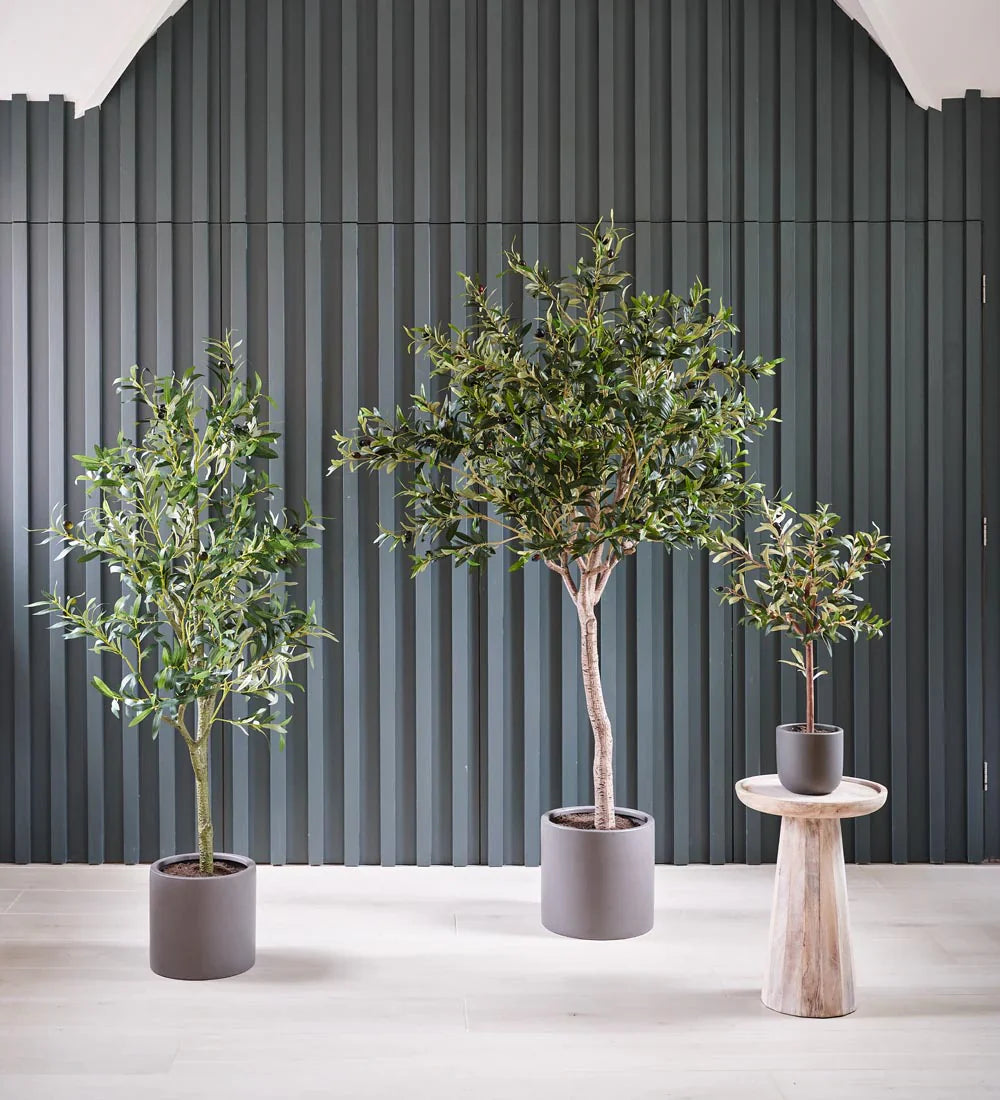
- Potted topiary trees: flexible for indoor-outdoor transitions and entertaining areas under cover.

Holiday styling logic: why artificial wins on timeline and risk
Australian holiday entertaining is often built around tight timing. That timing clashes with the realities of live plant performance. Live topiary can require acclimatisation after transport. It can drop leaves. It can respond poorly to a sudden change in light exposure. None of these are design problems. They are biology problems.
Artificial topiary is predictable. It can be deployed immediately, moved between zones, and stored between events. This matters in residential settings, but it is even more significant in commercial and hospitality environments where the cost of inconsistency is reputational.
When topiary is used as a holiday statement, the best placements are the most visible ones:
- Front entry: matched pairs that frame the doorway.
- Outdoor dining transition: a potted tree that anchors the edge of a space.
- Poolside or terrace corners: a vertical element that balances low seating lines.
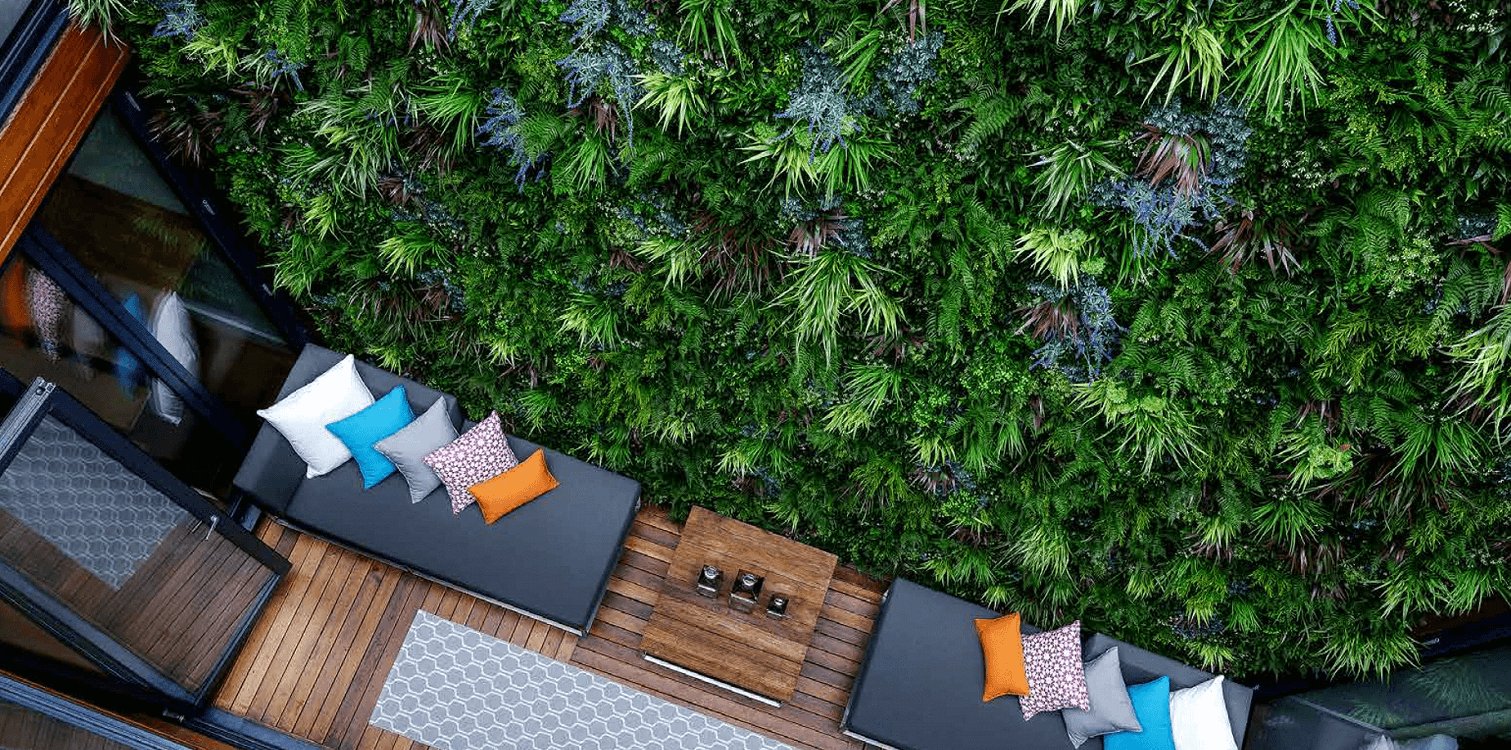
- Photography backdrop zones: coordinated topiary plus green walls or floral walls for consistent imagery.
The ecosystem advantage: topiary plus vertical gardens and hedge panels
One of the most strategic aspects of Designer Vertical Gardens is that topiary is not treated as a one-off product category. It sits inside a broader ecosystem of artificial greenery solutions that can be combined for larger design outcomes. This is particularly relevant for holiday styling, where a cohesive “whole house” look is often the goal.
The broader system typically includes:
- Artificial green wall panels: modular panels that can be combined to build feature walls and backdrops.
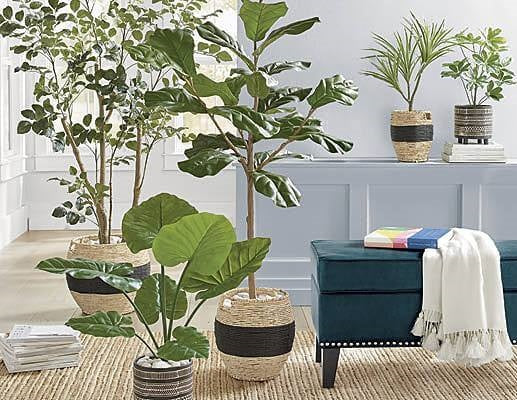
- Artificial plants: supporting pieces that soften edges and fill transitional spaces.
- Hedge screening panels: privacy and boundary solutions that also function as a green backdrop.
Comparison table: how to evaluate tiers in the artificial greenery market
Not all artificial topiary is built to survive outdoors. Many products are designed primarily for indoor use, then marketed broadly. The table below summarises the performance differences that tend to separate tiers.
| Criteria | Budget Imports | Mid-Range Retail | Specialist Grade (Designer Vertical Gardens) |
|---|---|---|---|
| UV performance | Often inconsistent | Basic treatment | Designed for Australian outdoor conditions |
| Foliage density | Sparse, frame visible | Moderate | High density for full silhouettes |
| Structural integrity | Light cores | Variable | Reinforced stems and stable frameworks |
| System integration | Standalone items | Limited | Works alongside green walls, hedge panels, and event backdrops |
Pros and cons: a balanced technical assessment
- Pros: zero watering, consistent aesthetics, fast installation, strong reliability for holiday timelines, reusable across seasons, scalable with green wall systems.
- Cons: higher upfront cost than some live alternatives, no ecological function, end-of-life disposal considerations, tactile realism varies by tier.
A practical checklist before you buy
If the goal is a premium finish, a short checklist prevents most common mistakes:
- Assess realism through tone variation: the best foliage is not a single flat green.
- Check the silhouette from multiple angles: topiary should read full, not hollow.
- Inspect trunk and stem stability: wobble is a red flag for outdoor placement.
- Match scale to the environment: small trees vanish at an entry, oversized trees can overwhelm.
- Plan for the pot: a clean planter is part of the specification, not an afterthought.
Final verdict: performance design for the season that matters most
Artificial topiary trees have matured into a category where engineering choices directly shape the aesthetic outcome. In the Australian climate, that engineering is not optional. It is the difference between a statement piece that holds its colour and silhouette, and a purchase that looks tired after a short run of sun.
Designer Vertical Gardens’ advantage is the combination of product performance and system thinking: UV resistant designs, dense foliage that reads as premium from a distance, and an ecosystem that can scale from an entry pair to green walls, hedge screening, and event-ready backdrops. For holiday-ready styling, that makes artificial topiary less of a seasonal shortcut and more of a long-term design asset.
Category: Home & Garden / Interior Design