
We examine the Elite 200 V2’s capacity, ports, charging choices and limits to help you decide whether this portable station fits your planned loads.
A portable power station earns its space when it can cover the devices you actually plan to use and can be recharged in the places you travel. BLUETTI Elite 200 V2 targets a fairly substantial job: its 2,073.6Wh battery and 2,600W rated AC output put it above the smallest travel units, while remaining a single portable appliance rather than a fixed home battery.
We reviewed BLUETTI’s Canadian product information to clarify what the model offers, where the capacity helps and which trade-offs buyers should account for. The strongest fit is someone with a defined list of camping, RV or household essentials, plus a practical plan to top the unit up after use. A buyer seeking only phone charging may be paying for more capacity and carrying more weight than necessary.
Heads-up: we earn a commission from some links in this article. It never changes the price you pay.
What you need to know
- Elite 200 V2 combines 2,073.6Wh of LiFePO₄ storage with 2,600W rated AC output.
- Its outlets include four AC sockets, dual 100W USB-C, two USB-A ports and a 12V car outlet.
- BLUETTI lists TurboBoost AC charging, up to 1,000W solar input and app monitoring; Charger 1 is sold separately.
- AC180 is a lower-capacity alternative; Elite 300 adds capacity but has lower listed AC output.
- Canadian cost depends on station versus solar or charger bundles; check the current product listing.
The Elite 200 V2 covers more than device charging
The model’s headline is 2,073.6Wh of LiFePO₄ capacity and 2,600W of continuous AC output. Capacity describes stored energy; output describes how much power the inverter can supply at once. Both matter. A device can fit below the output ceiling yet drain the battery quickly, while several small electronics may run for much longer. Real runtime changes with appliance draw, duty cycles, conversion losses and temperature, so BLUETTI’s examples are planning estimates rather than guarantees.
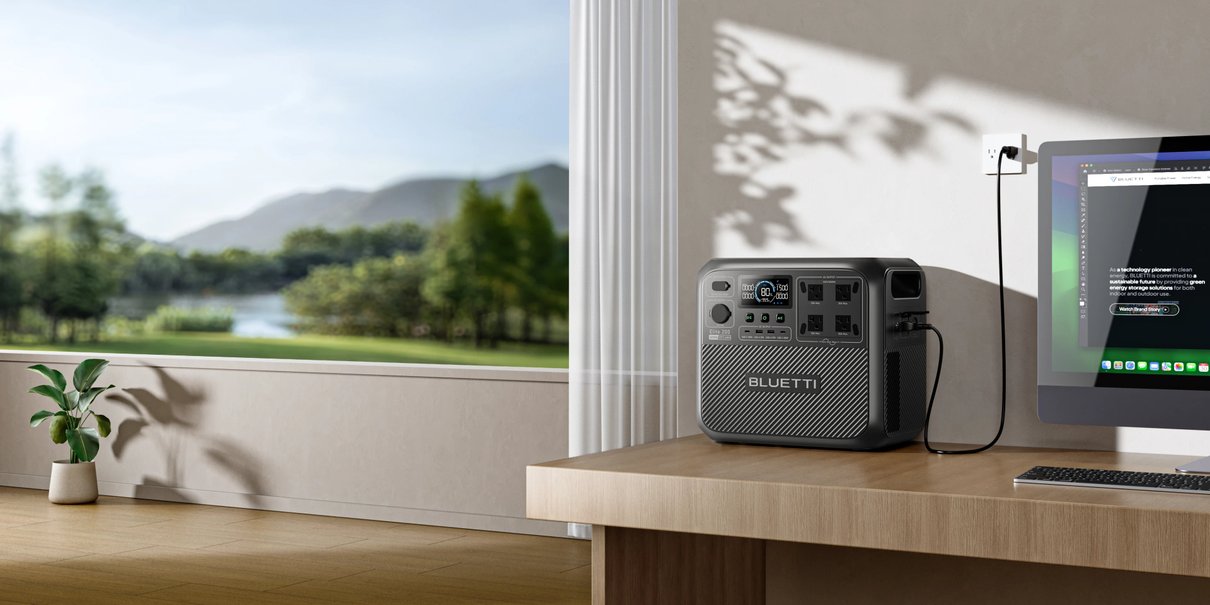
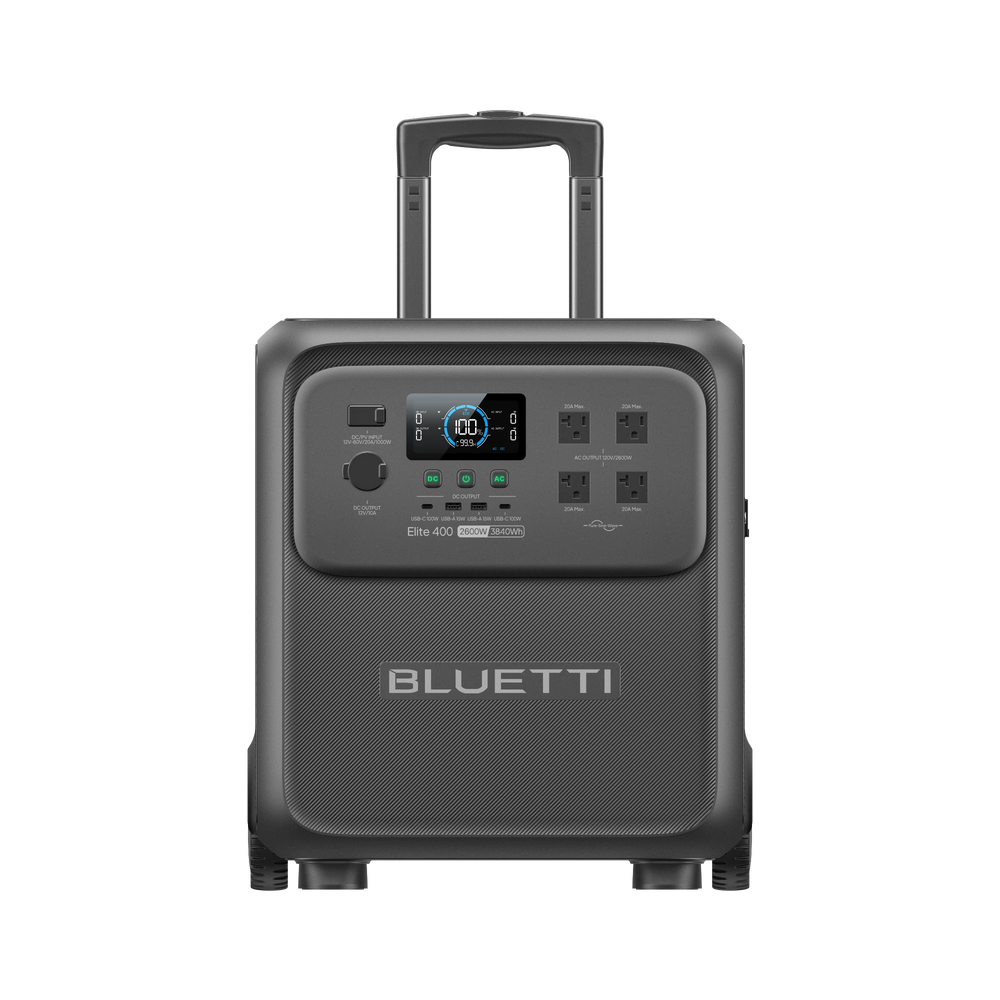
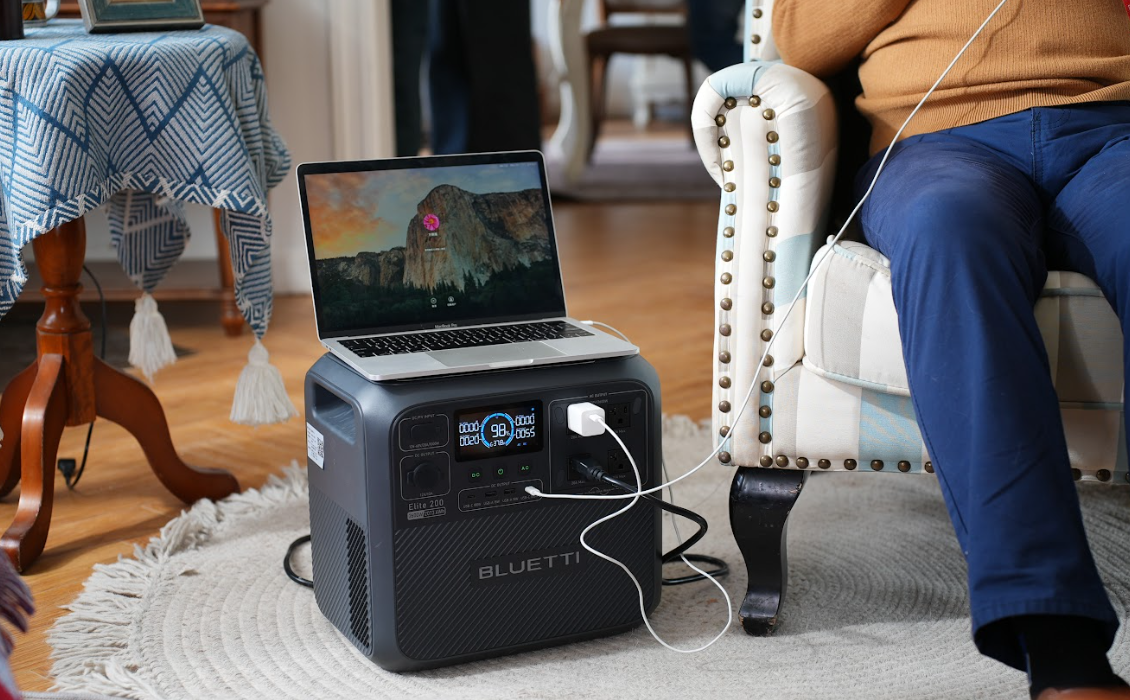
Four AC outlets make the Elite 200 V2 practical for a mixed campsite or backup corner. Two 100W USB-C ports can serve compatible laptops and tablets directly, alongside two USB-A ports and a 12V car outlet. That reduces the need for adapters for common electronics. Check the exact load and connector requirements of anything more demanding, and remember that startup surges from compressors or motors can differ from their running wattage. See the Elite 200 V2 product details and listed output specifications before building a device list.
- Camping: keep phones, lights, cameras and laptops charged, with reserve for selected appliances.
- RV stops: run compatible plug-in gear when a campsite hookup is unavailable.
- Home outages: prioritize communications, lighting, a router or other selected essentials rather than assuming whole-home coverage.

The comparison comes down to duration, output and how often you can recharge, not simply the largest capacity number.
For a trip, the Elite 200 V2 listing is most relevant after estimating the watt-hours your gear uses overnight. In a home, match each appliance’s running and starting requirements to the available output, then decide how many hours of reserve you want. A station in this class supports a shortlist of priorities; it is not a substitute for a load calculation or an installed transfer system. Check the manufacturer’s load information alongside appliance manuals.
Charging choices add flexibility, with accessories to check
BLUETTI lists TurboBoost AC charging, solar input up to 1,000W and vehicle charging through the separate Charger 1 accessory. The company states that wall charging can reach 80% in about 1.1 hours and solar charging can fill the battery in about 2.4 hours under its stated conditions. Those are manufacturer figures, not field guarantees: solar production varies with panel capacity, angle, weather, season and shading. Its Canadian product page describes supported inputs and bundle choices.
For weekend camping at a powered site, AC recharging may be all you need. A longer off-grid stay makes a compatible panel more useful, but it adds equipment to carry and deploy. Buyers driving between locations can consider the Charger 1 accessory details, noting that BLUETTI lists it as sold separately. Check whether the selected Canadian configuration includes panels, cables and the charging hardware you expect; bundle photographs and headlines do not always make the contents obvious.
- List each intended device and note its wattage and likely hours of use.
- Choose your usual recharge source: wall, solar or vehicle accessory.
- Confirm included cables, panel compatibility, storage space and current bundle terms.
- For backup, test the intended devices and keep an alternate plan for extended outages.
Its capacity comes with practical size and runtime limits
The Elite 200 V2 makes the clearest case for itself when that reserve will be used: several electronics, a longer camp, or a considered set of household essentials. LiFePO₄ chemistry, app monitoring and multiple input methods add flexibility. But a 2kWh-class station is bulkier than a compact power bank, and the useful runtime falls quickly with high-wattage appliances. The product is less convincing if the main need is topping up phones, or if the buyer expects to power an entire home through a lengthy outage. The Elite 200 V2 feature page sets out its intended camping and home-backup uses.
Price also depends on the setup. A base station, a solar kit and a vehicle-charging configuration are different purchases, so the relevant comparison is the complete system you need, not just the bare unit. Review the current Elite 200 V2 options and Canadian warranty information for availability, included accessories and terms. Buyers comparing future cost should account for any separate panel or charger before deciding.
- Strength: substantial capacity and rated output in one station, with a useful mix of outlets. See the port layout.
- Strength: AC, solar and vehicle charging options support different trip patterns.
- Limit: accessories may be separate, and real runtime depends on actual loads. Check the charging specifications for compatible inputs.
- Limit: carrying a larger station is less appealing for minimalist travel or very light charging needs.
AC180 and Elite 300 frame the choice
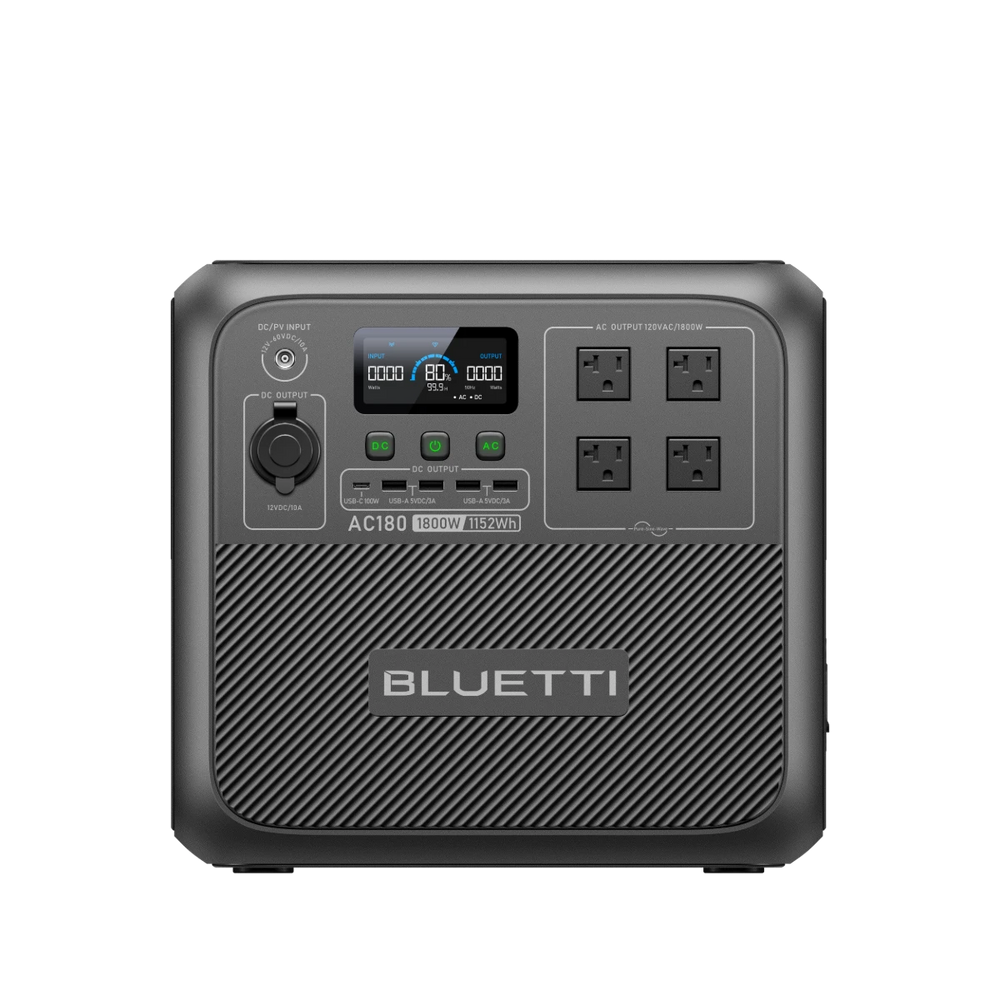
The AC180 offers 1,152Wh and 1,800W output on BLUETTI’s Canadian site. It is the more compact-capacity direction for shorter outings and lighter loads, while still listing four AC outlets and app support. If your gear list is mostly electronics and occasional modest appliance use, compare the AC180 product page with the Elite 200 V2 details; a lower-capacity option can be easier to justify if it covers the actual trip.
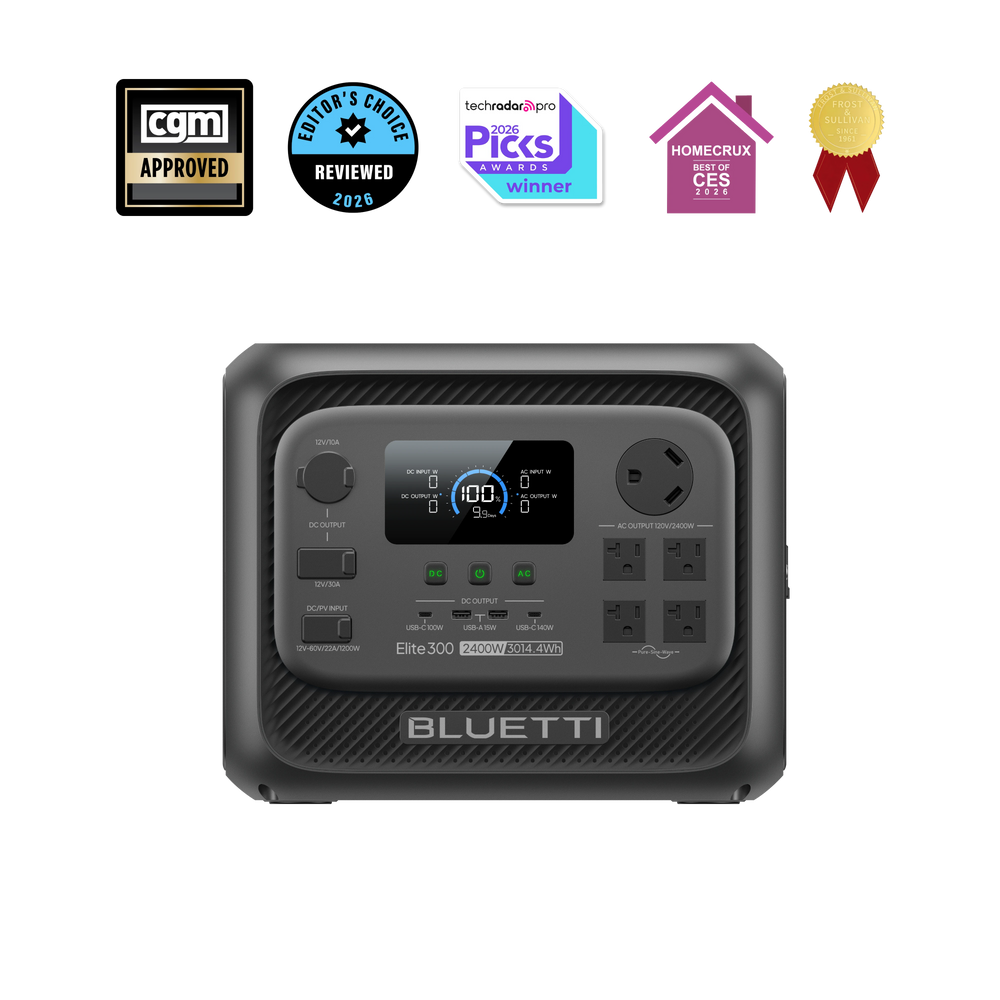
The Elite 300 moves the other way, listing 3,014Wh but 2,400W of AC output. That extra stored energy can suit longer stays, though the rated output is lower than the Elite 200 V2’s. Capacity and output are separate decision points; more battery does not automatically mean support for a more powerful appliance. Review the Elite 300 listing against your recharge routine, physical storage and load requirements, and check the Elite 200 V2 page for a direct reference point.
Is the Elite 200 V2 a sensible fit for your load list?
We recommend the Elite 200 V2 for campers, RV users and households who have named several meaningful loads, value its port mix and know how they will recharge it. Its capacity and 2,600W rating give it a broad role, but the honest limitation is that it remains a finite battery with real carrying and accessory considerations. If your load list is short, compare the AC180; if duration matters more than output, investigate the Elite 300. Start with the specific appliances and recharge plan, then review the Canadian Elite 200 V2 listing for the current configuration.