

Category: Travel & Experiences
One World Observatory is often described as “the view from the top of New York.” That is accurate, but incomplete. The more useful way to think about it, especially for Australian travellers doing a long-haul trip with limited days in Manhattan, is as a carefully engineered system: a sequence of spaces, technologies, and time-based cues designed to deliver one outcome consistently. You arrive. You ascend fast. You get context. Then you get the skyline, at a scale that makes the city feel readable.
This article takes a technical and analytical approach to the experience, with practical planning guidance for Australians. It covers the building and deck metrics, the experience design layers, ticket structure logic, photography constraints, and how One World Observatory compares to other NYC observation decks at a decision-making level.
Expert framing: The best observation decks reduce uncertainty. One World Observatory does that through height, indoor climate control, and a tightly managed arrival sequence that makes the reveal predictable in quality, even when the city is chaotic.
What You Are Buying: The Core Value Proposition
One World Observatory is the indoor observation experience located at the top of One World Trade Center in Lower Manhattan. The tower’s symbolic height is 1,776 feet (about 541 metres), referencing the year of American independence. The observatory spans floors 100, 101, and 102. The main observation level on floor 100 sits at roughly 381 metres above street level.
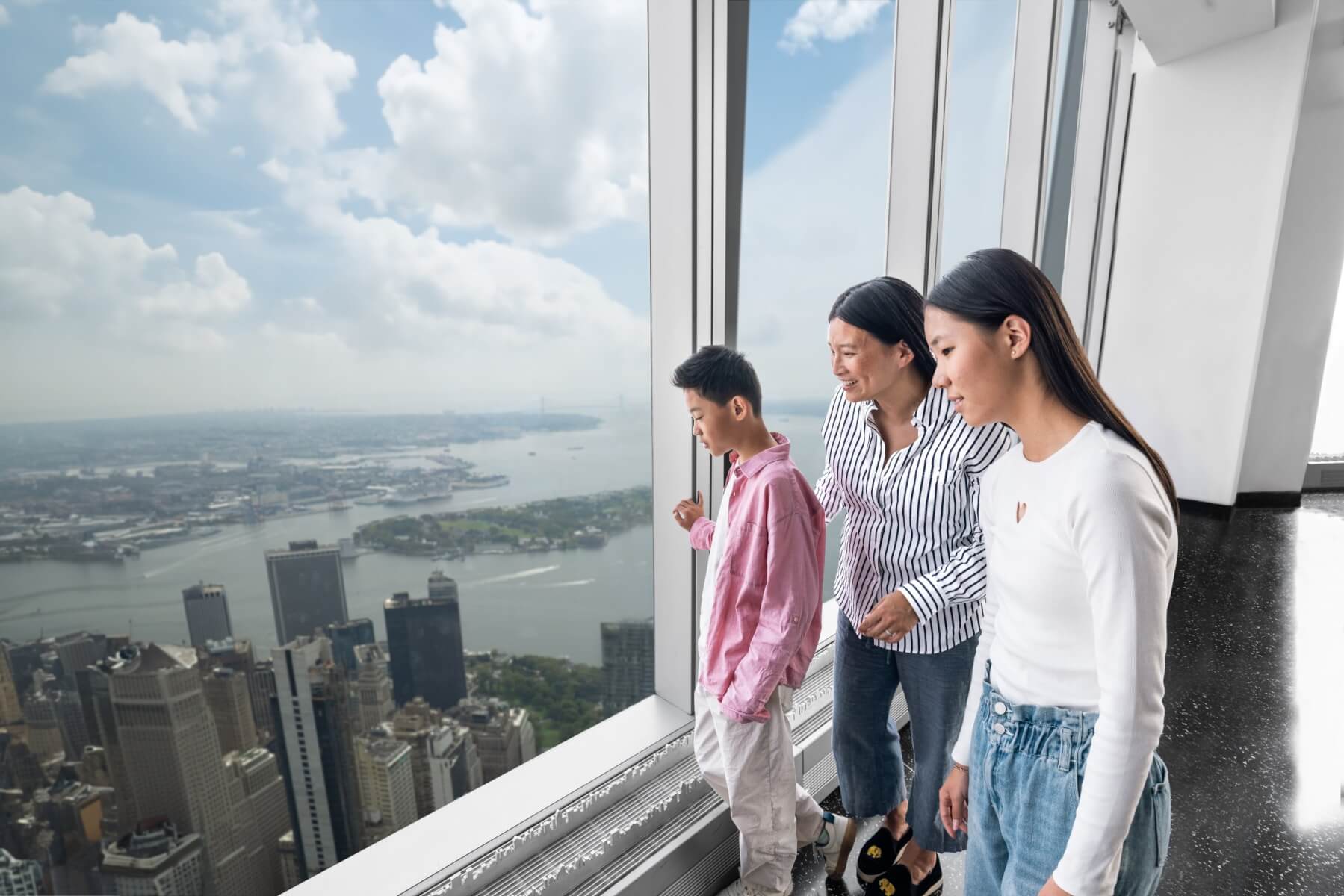
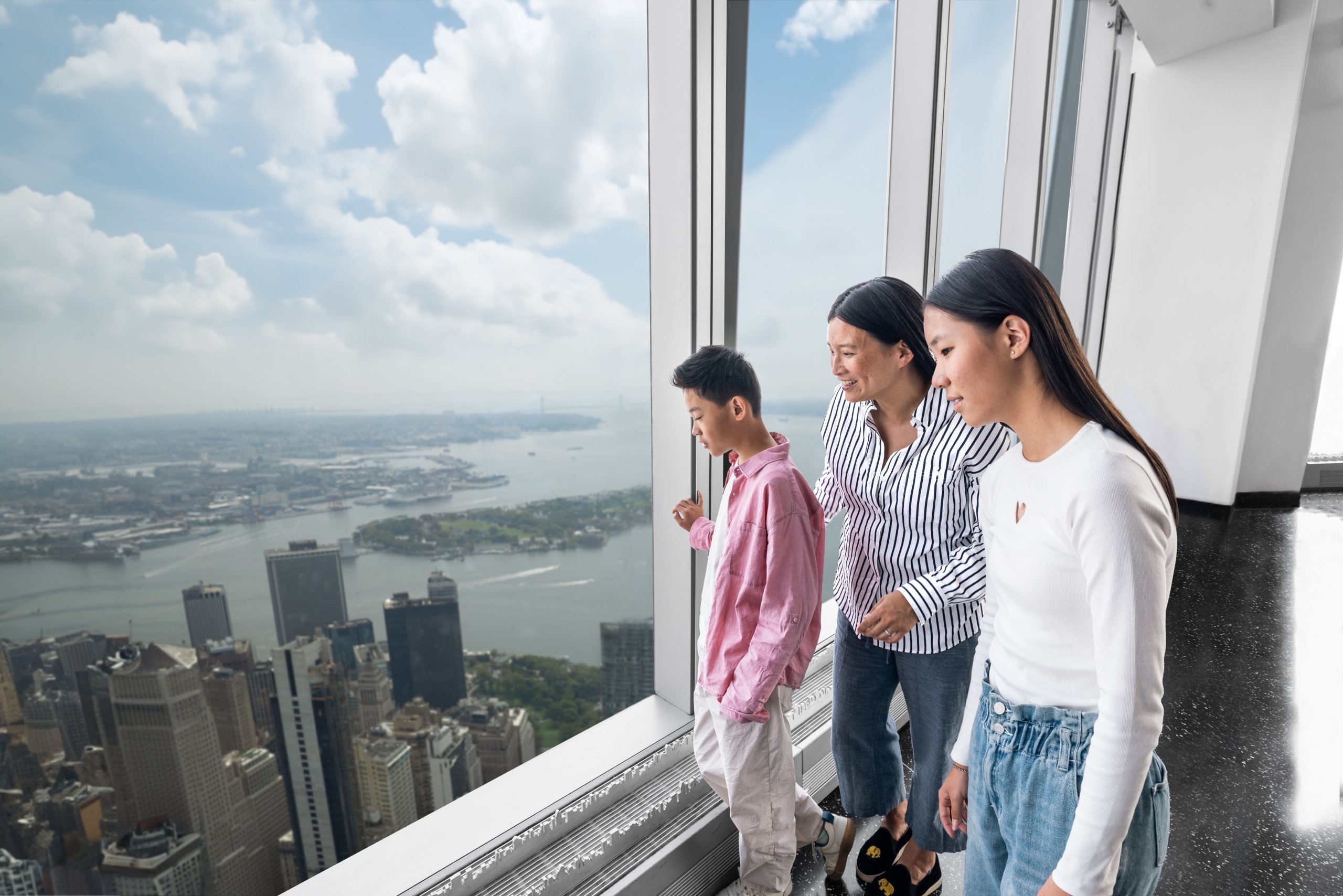
At that elevation, the skyline becomes a map. On clear days, visibility can extend up to 80 kilometres, allowing visitors to see across all five boroughs, New Jersey, and beyond. For Australians who have visited Sydney Tower Eye (250 metres to the observation deck), the difference is not marginal. It changes the horizon line and the density of recognisable landmarks within a single frame.
See Ticket Options and Entry Times
The Experience Design, Layer by Layer
One World Observatory’s competitive advantage is not only height. It is the way the visit is staged. Instead of treating the elevator as a functional necessity, the venue turns the ascent into a high-impact feature, then uses theatre and interactive tools to help visitors interpret what they are seeing.
Layer 1: Orientation and Context
Before the ascent, guests move through a corridor-style introduction that frames the building’s construction and significance. This matters because it increases perceived meaning. In experience design terms, context increases emotional retention. You remember what you understand.
Layer 2: The SkyPod Elevators (Speed and Story in 47 Seconds)
The SkyPod elevator system is where the observatory becomes distinctly modern. The elevators travel at approximately 37 km/h, covering the full 381-metre ascent in just 47 seconds. That averages roughly 8.1 metres per second. The transition from ground to sky feels close to instantaneous, yet the walls are not blank. They are a full-height LED narrative: a time-lapse of New York’s skyline evolving from early settlement to the present.
Technically, it is an elegant use of unavoidable dwell time. The elevator ride is a constraint. The content layer converts that constraint into value.
Layer 3: See Forever Theatre (A Controlled Reveal)
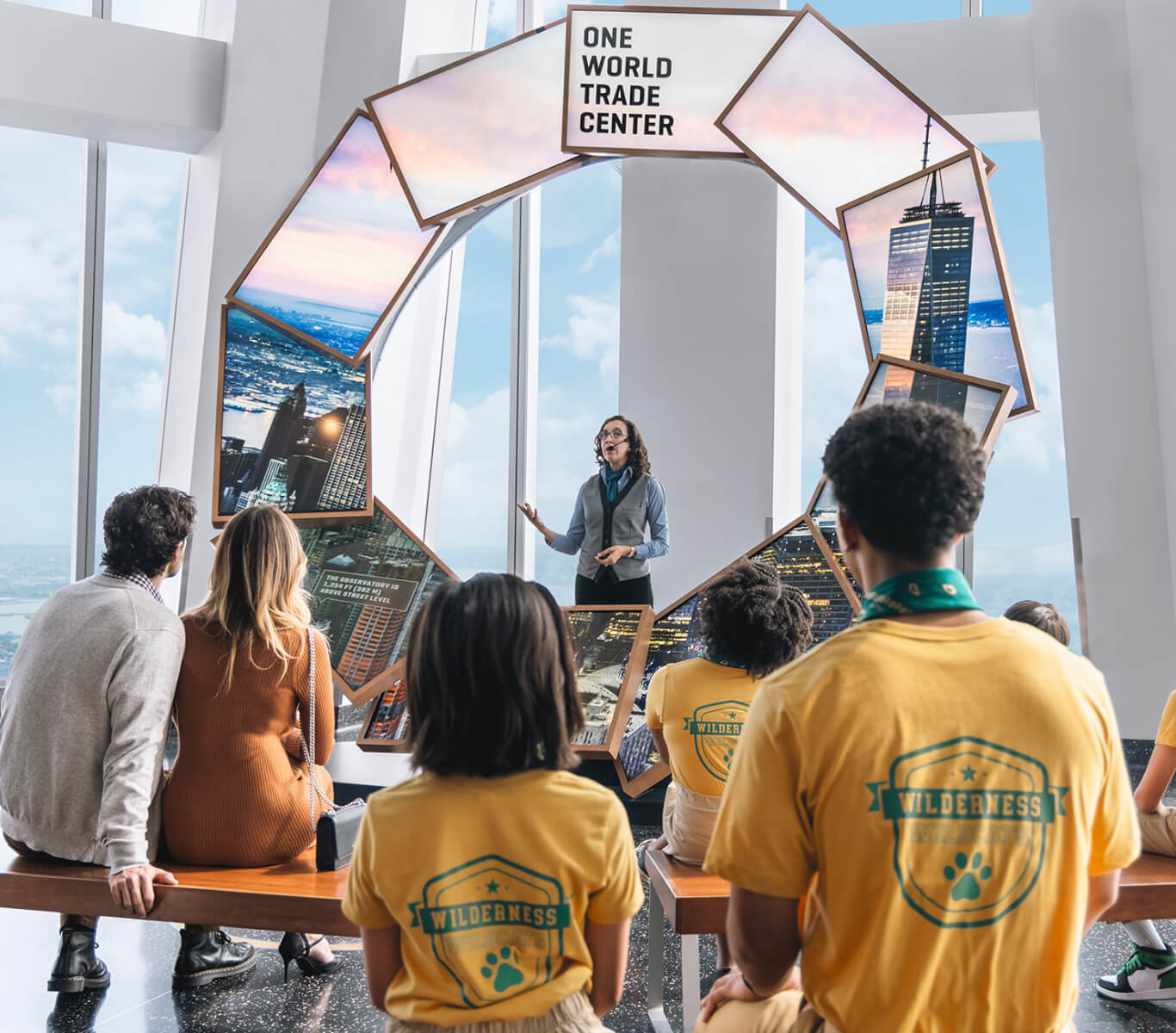
At floor 102, visitors enter a theatre space with surround projection. A short film builds toward a reveal, and the projection screens physically retract upward to expose the real panoramic windows and the skyline itself. It is a calibrated piece of theatrical engineering. The goal is simple: to make the first view feel like an arrival, not an accident.
Layer 4: The Main Observation Deck (Floor 100) and Its Tech Stack
Most visitors spend the bulk of their time on floor 100. The panoramic view is the anchor, but several technology installations add interpretive depth and a measurable increase in engagement time:
- City Pulse – Large-format interactive touchscreen tables positioned near the windows. Visitors can tap on buildings and neighbourhoods visible in the panorama to receive contextual information. This is particularly useful for travellers building an itinerary and trying to connect the skyline to street-level destinations.
- Sky Portal – A 4.3-metre-diameter circular glass disc set into the floor, displaying a live, high-definition video feed from exterior cameras pointing directly downward. It creates a “vertical reference” effect that reinforces height perception.
- One World Explorer – iPad-based digital guides (available with premium ticket tiers) that use GPS and compass orientation to identify landmarks in real time as visitors point toward different parts of the skyline.

Layer 5: Dining and Extended Dwell Time (Floors 100-101)
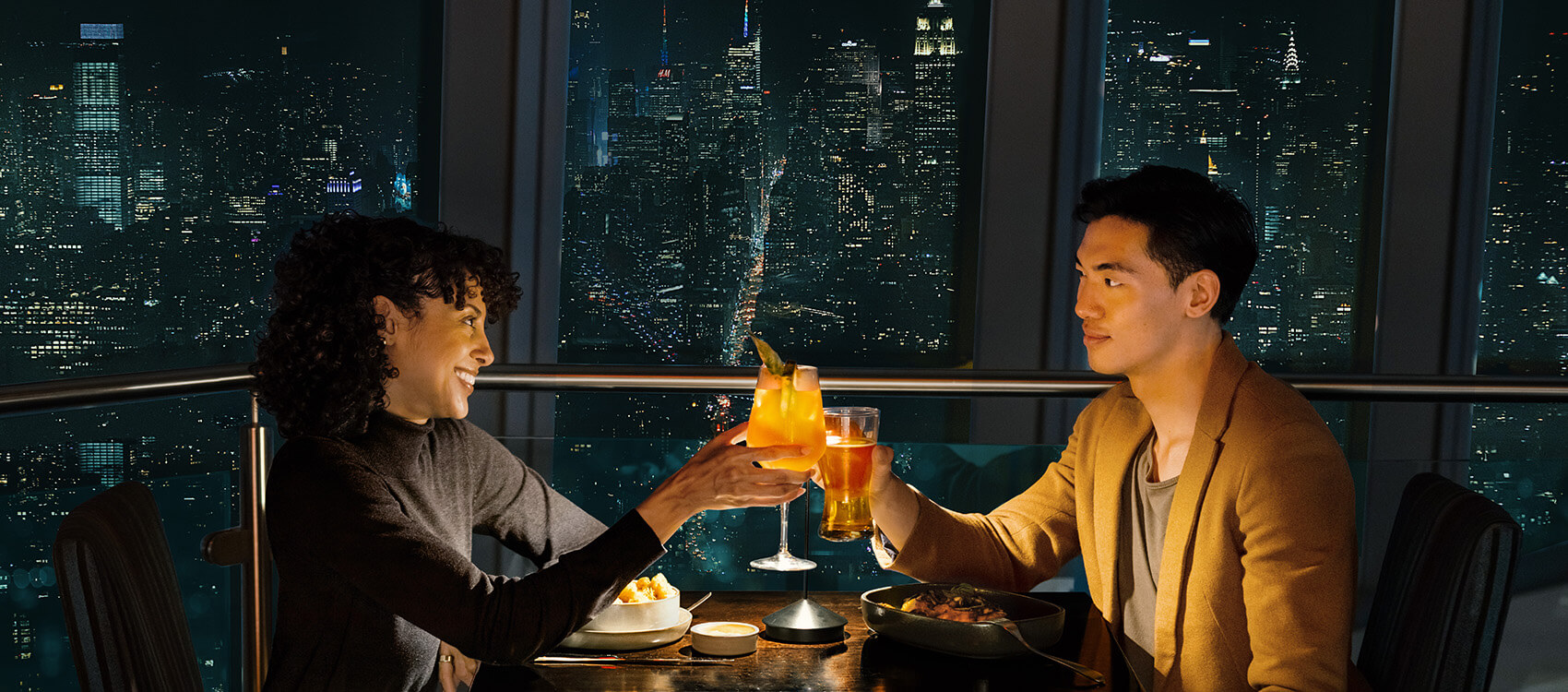
One World Observatory is also designed to support longer stays. Dining options include ONE Dine, a full-service restaurant and bar on floor 101. From a planning perspective, this transforms the observatory from a 45 to 60 minute “tick-the-box” attraction into a multi-hour block, especially if you time it around sunset and choose to stay through early night views.
Ticket Structure: How to Choose Based on Constraints
One World Observatory offers multiple ticket categories that add incremental layers to the baseline experience. The best choice depends less on “what is best” and more on what constraints you are managing: fixed schedules, weather risk, crowd tolerance, and the practical realities of arriving from Australia with jet lag.
| Ticket Type | What It Prioritises | Who It Suits |
|---|---|---|
| Standard or General Admission | Core access with timed entry | Travellers with a predictable day plan and lower need for flexibility |
| All-Inclusive | Flexibility and add-ons such as digital guide and potential food or beverage credit (offer-dependent) | Long-haul travellers who want fewer scheduling penalties and more context |
| Combination Packages | Bundled planning and potential savings (offer-dependent) | Visitors building a full Lower Manhattan itinerary in one day |
Standard or General Admission typically includes timed entry, the SkyPod elevator ride, access to floor 100, and the fixed installations such as City Pulse and Sky Portal. It delivers the core visual impact.
All-Inclusive tickets generally add the One World Explorer digital guide, priority or flexible entry windows, and food and beverage credit. The flexible entry component is often the most valuable, because it allows travellers to adjust for weather or energy levels. For Australians, this matters. Long-haul arrival fatigue is real, and New York weather can change quickly.
Combination packages can bundle One World Observatory with other experiences. Given the observatory’s Lower Manhattan location near the 9/11 Memorial precinct, the Oculus transit hub, and onward access to Battery Park, bundles can make sense when your itinerary is dense.
Australian planning tip: Peak demand often concentrates in June through August and during the December holiday period. If travel dates are flexible, shoulder months such as April to May or September to October can mean thinner crowds and strong visibility conditions.
Check Availability and Ticket Inclusions
Photography Analysis: What Works, What Fails, and How to Plan
An indoor observation deck is a gift for comfort, but a constraint for photography. The glass is the trade-off. The goal is to manage reflections and maximise clarity.
Best conditions
- Overcast afternoons can reduce glare and interior reflections.
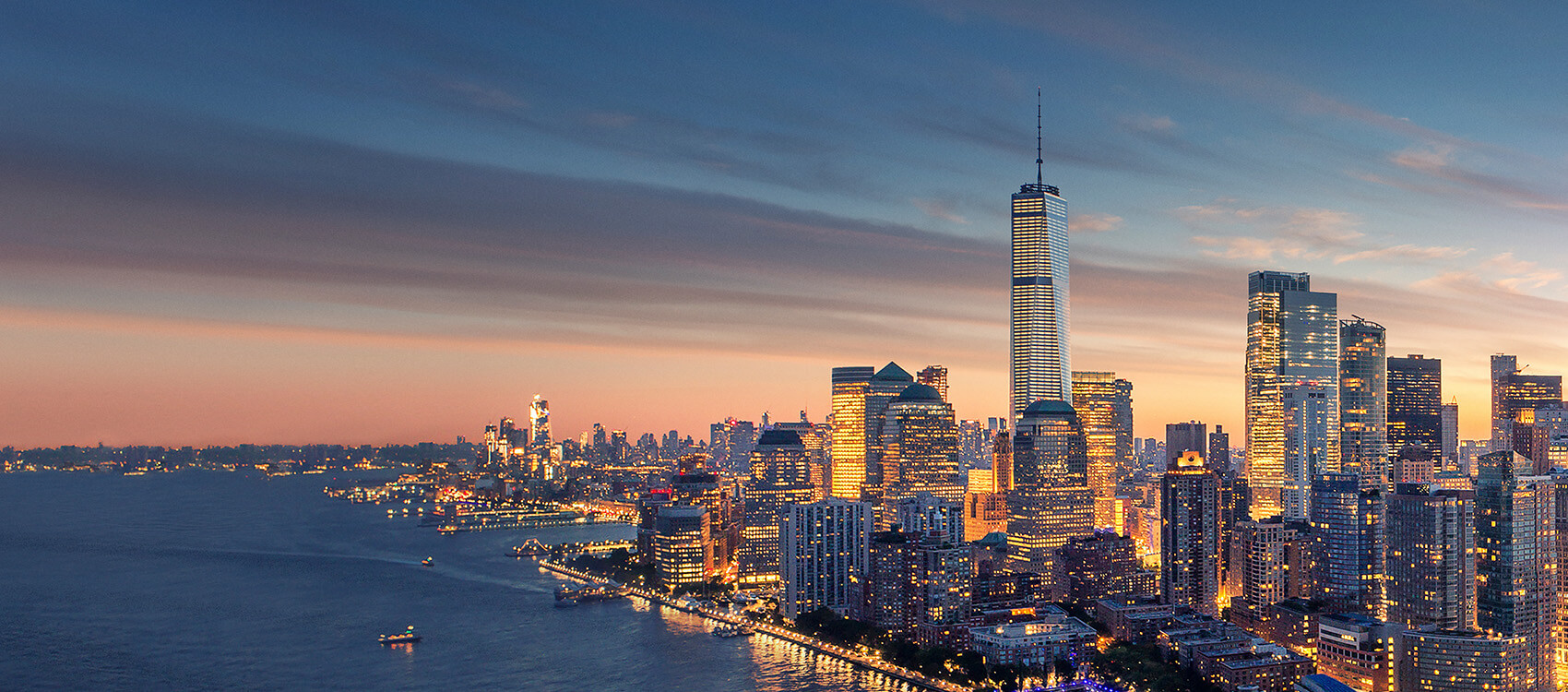
- The period from 30 minutes before sunset through to full darkness is the most dynamic visually, because you capture warm light, the transition, and city illumination.
Main challenges
- After dark, reflections increase as interior lights bounce back off the glass.
- Crowding near the best window angles can limit tripod-like stability for handheld long exposures.
Equipment and technique (practical, not gear-hype)
- An ultra-wide lens (roughly 16-35mm equivalent) is useful for full skyline sweeps.
- Pressing the lens hood gently against the glass can reduce reflections.
- Move around. Reflection patterns change by angle and by proximity to interior light sources.

Pros and Cons: A Balanced Assessment
- Pros: Tallest observation experience in the Western Hemisphere, multi-stage narrative design, standout SkyPod elevator technology, southern Manhattan location with harbour and Statue of Liberty views, indoor climate control, proximity to the 9/11 Memorial precinct, interactive technology that adds context, accessibility support for mobility needs.
- Cons: No outdoor viewing, glass reflections can complicate night photography, timed entry can reduce flexibility on busy days, Lower Manhattan location may require extra transit time from Midtown hotels, premium tiers can be a significant AUD conversion.
Practical Logistics for Australians
Address: One World Trade Center, 117 West Street, New York, NY 10007
Transit access: Fulton Street (2/3/4/5/A/C/J/Z lines), World Trade Center (PATH), Cortlandt Street (R/W)
Typical hours: Commonly 10:00 AM to 9:00 PM, with seasonal variation and extended hours at peak times. Confirm before visiting.
Visit duration: Allow 75 to 120 minutes for a thorough experience, longer if dining or timing around sunset.
Advance booking: Recommended, especially for sunset slots.
How It Compares: The Decision Logic vs Other NYC Decks
One World Observatory’s differentiation is structural: it is in Lower Manhattan, it is extremely tall, and it is entirely indoors. Competing decks in other parts of the city may offer open-air platforms or different skyline compositions, but they cannot replicate the same southern, harbour-facing panorama at this height.
If your priority is a classic Midtown framing with Central Park, other locations may suit that specific composition. If your priority is understanding the geography of New York from the southern tip upward, One World Observatory is the cleanest choice.

Final Assessment: Height as a Starting Point, Not the Whole Story
One World Observatory succeeds because it treats height as the entry point, then builds a layered visitor experience around it. The SkyPod elevator makes the ascent meaningful. The theatre makes the first view feel intentional. The interactive installations help visitors translate a panorama into a plan. For Australians, that combination is practical as well as emotional: it creates a high-confidence attraction that performs well under variable weather and variable energy levels.
For many long-haul travellers, the strongest value often comes from prioritising flexibility and timing. If you can align your visit with the sunset window and allow enough time to explore the full perimeter, you will leave with both the photos and the deeper spatial understanding of New York that only a truly high vantage point can deliver.
Plan and Book Your One World Observatory Visit
Meta description: One World Observatory tickets analysed for Australians: tech features, ticket tiers, timing, photography tips, and comparisons. Click to read the full guide.