

A close look at the brand’s ready-made gift boxes, personal touches and the recipient checks worth making before you choose.
Choosing a gift for someone going through a busy or difficult stretch is less about finding a grand gesture than making the choice feel considered. Don’t buy her flowers takes a practical route: curated boxes with food, drink or care themes, presented as gifts rather than loose items to assemble.
This review is based on the brand’s UK product information. It looks at what the format does well, where a fixed selection can miss, and which recipient is most likely to appreciate each option.
Heads-up: we earn a commission from some links in this article. It never changes the price you pay.
What you need to know
- Ready-made boxes combine a clear theme with wrapping and a handwritten message.
- Mini Festive Afternoon Tea focuses on fruity and Christmas pudding flavours.
- The Christmas Hamper is the broader sweet-and-savoury choice for sharing or grazing.
- Christmas Care Package is positioned around taking time to rest, so it suits a different moment.
- Check the recipient’s preferences and the current UK delivery information before selecting a box.
The strongest argument for the range is convenience with a personal finish. The sender chooses a theme, while the brand says its packages arrive gift wrapped and include a personalised handwritten message. That takes care of two details that can otherwise make an online gift feel unfinished. The trade-off is that the recipient does not choose every item inside a ready-made box.
Ready-made boxes make the gesture easier to finish
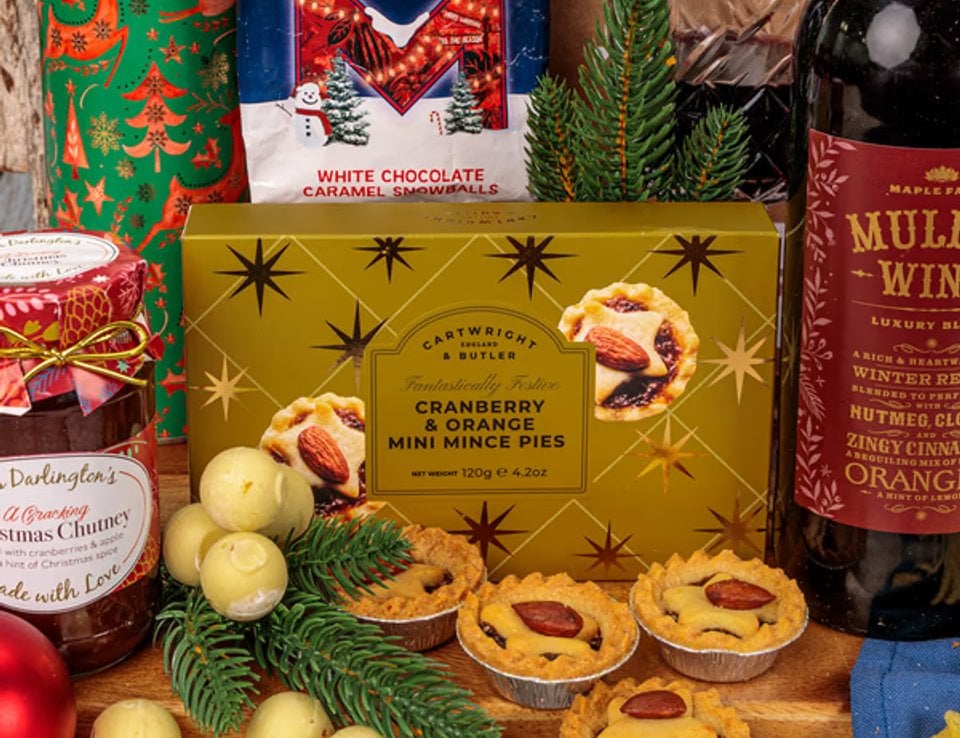
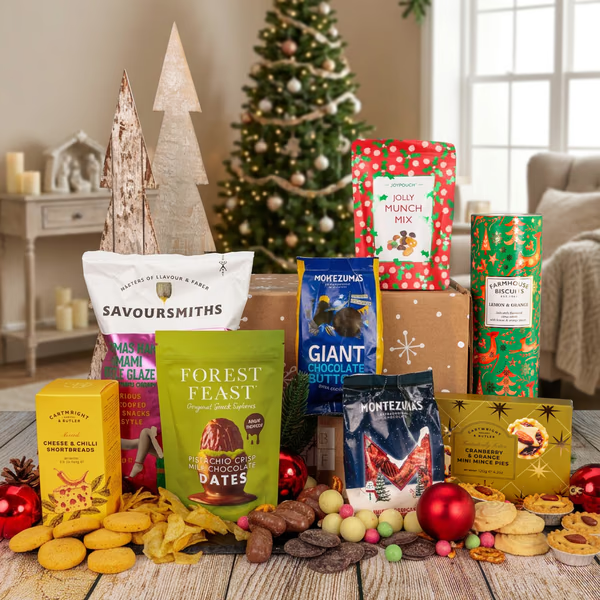
A coordinated box can be useful when the sender knows the broad mood but not the exact item list. The Christmas Hamper is described as a mix of sweet and savoury festive best-sellers, intended for a film night, guests dropping in or grazing over several days. It has a clear social use, which helps the sender explain the gift without needing to overstate its meaning.
For a closer look at the savoury-and-sweet format, the hamper product page is the place to check the current selection. A sender comparing it with the afternoon tea option can decide whether variety or a narrower flavour theme better matches the person. That small bit of recipient knowledge matters more than choosing the largest-looking box.
The packaging and note matter here. Gift wrap and a handwritten card give the box a finished presentation, and the personal message lets the sender add context. The product page also describes a recyclable hamper box. These are concrete conveniences, though they do not tell us the exact contents from the general description alone. For a recipient with dietary restrictions, check the listed ingredients and allergens before choosing a food-led option.
- Choose a broad food assortment when sharing is likely.
- Choose a narrower food theme when you know the recipient enjoys that flavour direction.
- Read the item details for ingredients and allergens rather than assuming the theme answers those questions.
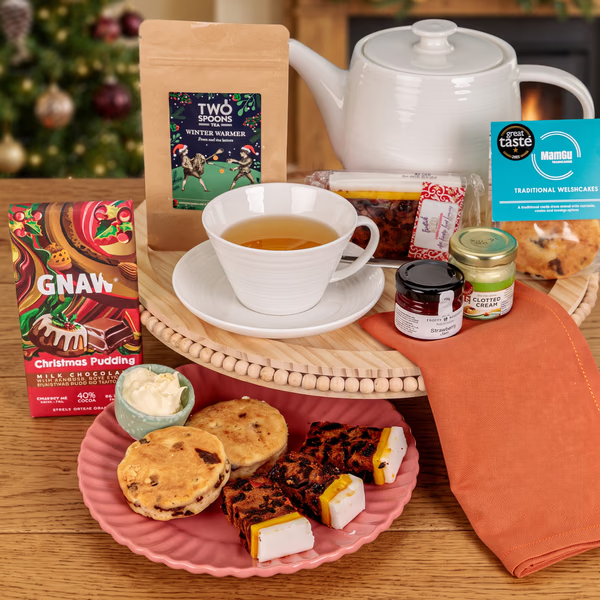
The Mini Festive Afternoon Tea takes the more specific route. The page describes a carefully put together selection with festive fruity and Christmas pudding flavours. That focus makes it easier to match to someone who enjoys seasonal tea-time treats, but less flexible for someone who prefers savoury snacks or dislikes those flavours.
This is a useful distinction between the food options: the hamper suggests variety and sharing, while the afternoon tea box offers a more recognisable occasion. Product pages should be treated as the authority for the current selection, since seasonal assortments can change. Neither description establishes suitability for every diet, so checking allergens remains part of the sender’s job.
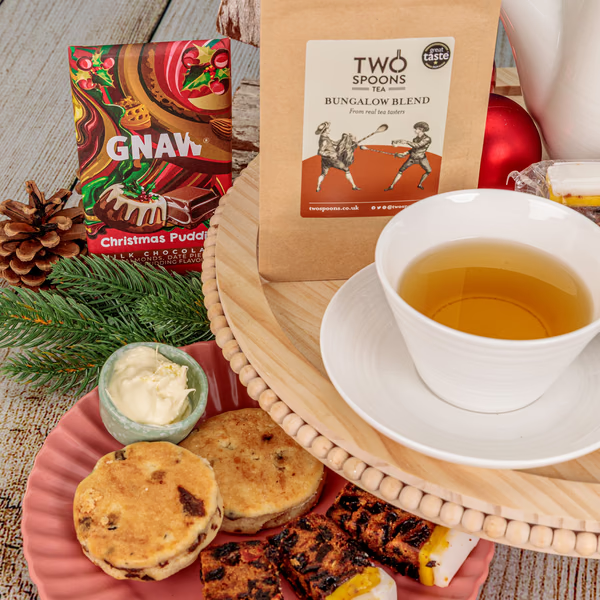
The Mini Festive Afternoon Tea is therefore best treated as a taste-led present. Its description gives a useful flavour cue, but not a full dietary profile. If the recipient enjoys seasonal cakes and tea-time food, the theme may feel intentional; if that preference is unknown, the broader hamper or a build-your-own gift may leave more room to make a suitable choice. The store’s product information should settle questions about what is currently included.
The care box has a narrower emotional brief
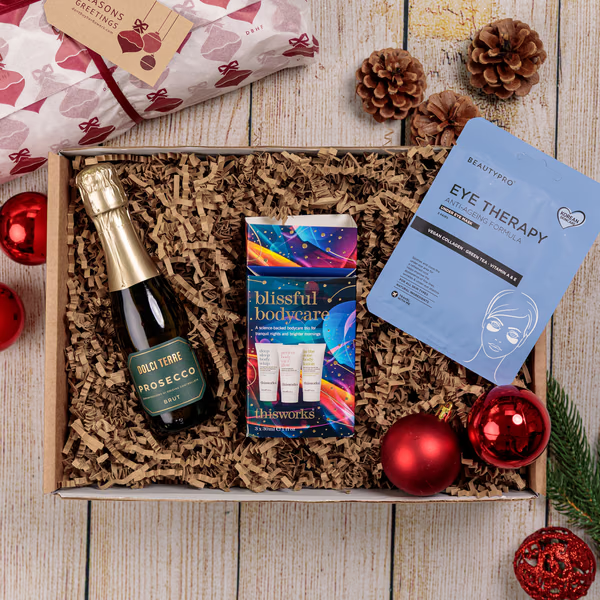
The Christmas Care Package is presented as a gift for someone who could use time to themselves during a demanding season. Its proposition is less about feeding a group and more about signalling permission to pause. That can make it a thoughtful fit when the sender knows the recipient would welcome a care-focused gesture.
Its limitation is the same as its strength: the theme is specific. A box framed around rest and self-care may feel less apt for someone who would rather receive food, a practical item or a choice of their own. Review the current contents and avoid treating the product name as proof that every item will suit the recipient. The brand’s own category structure, with ready-made, food and build-your-own routes, gives shoppers a way to compare the level of choice before settling.
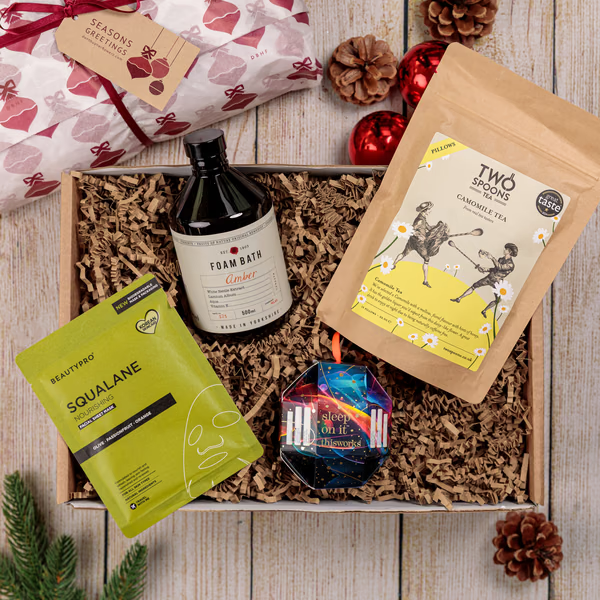
A useful way to assess the care package is to ask whether the recipient would welcome the suggestion to slow down. A supportive note can explain the intention, while the product itself keeps the sender from needing to assemble separate items. For someone whose needs are uncertain, browsing the care option details alongside food-led choices is a sensible pause before committing.
- Think about whether the recipient values a ready-made gesture or selecting their own items.
- Match the box’s theme to a known preference, not just the occasion.
- Confirm the product page’s contents, delivery area and available delivery choices before placing an order.
For More control, the brand also offers a create-your-own route, while ready-made boxes make the sender’s decision quicker. The balance is straightforward: more curation means fewer choices to make, but also less ability to tailor every component. That is why these gifts work best when the sender can identify at least one reliable clue about the recipient’s taste or current needs.
Delivery and selection still need a final check
The hamper page, afternoon tea page and care package page each provide product-specific details, so compare them directly rather than assuming all ready-made gifts have the same contents or delivery terms. This is particularly useful when the gift has a date attached or when food preferences narrow the options.
The UK product pages list multiple delivery choices, including standard and faster services for mainland UK. Options and availability can vary, so check the relevant product page and the brand’s delivery information for the destination and timing you need. The available details support the convenience claim, but they do not remove the need to plan ahead or confirm current terms.
Food selections require an extra practical check. The hamper page directs shoppers to nutritional and allergen information, an important step for gifts that will be eaten or shared. For non-food care gifts, the equivalent check is whether the items and tone match the person. Personalisation helps make the note specific; it does not make a mismatched selection more suitable.
Are curated boxes from Don’t buy her flowers a good fit?
We recommend Don’t buy her flowers for senders who value a prepared, gift-wrapped box and can match a known preference to a clear theme. The food assortment is the safer direction for sharing, the afternoon tea is more specific, and the care package speaks to a rest-focused moment. The honest limitation is fixed contents: recipients with particular tastes, allergies or a preference for choosing their own items need more checking, or a more flexible route.
Before deciding, compare the current box details and UK delivery information on the store. That final look is especially useful for seasonal selections, where contents and availability can change.