

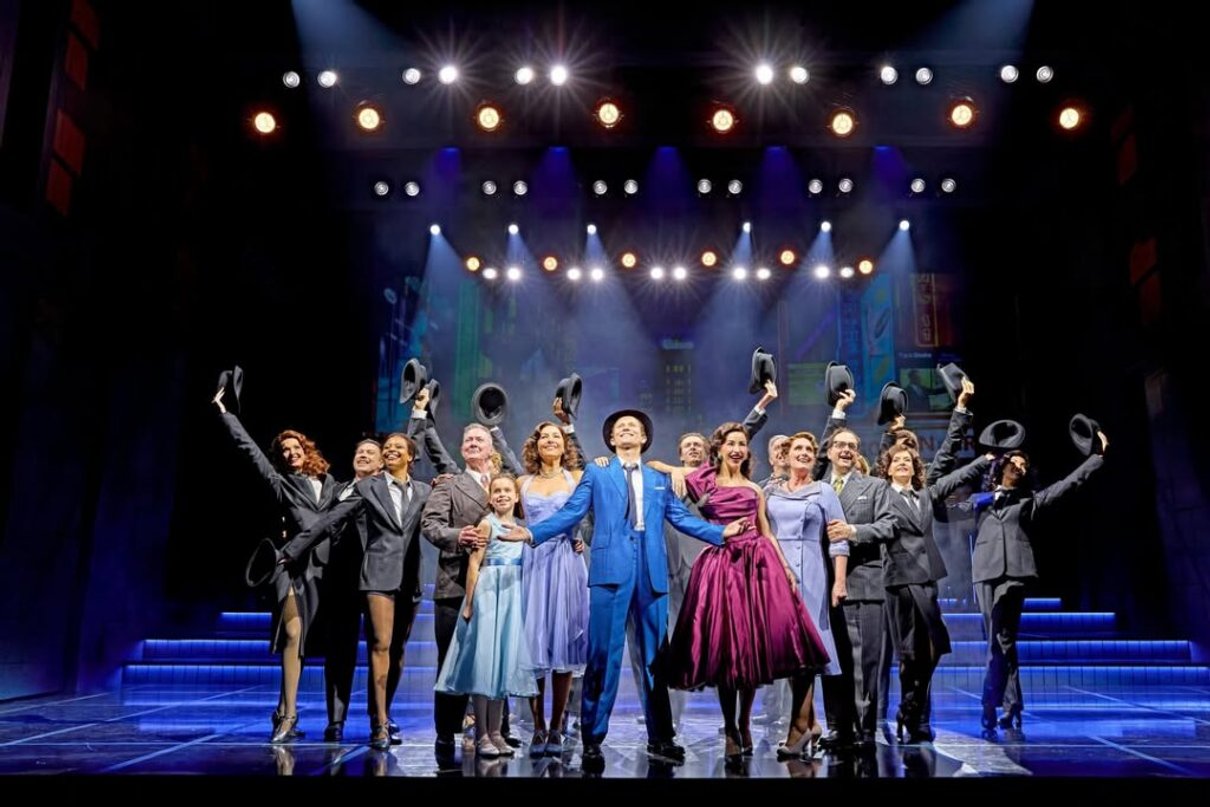
A research-led look at the show’s biographical premise, familiar songs and official booking routes, with the trade-offs to weigh before planning a West End visit.
A jukebox musical can succeed as a concert-like celebration, a character study, or a careful balance of both. The official material for Sinatra the Musical promises the last of these: a life story shaped around well-known songs, staged at London’s Aldwych Theatre.
We reviewed the production information and its official ticket pages, rather than attending the show. That makes the useful question a practical one: does the published story and booking setup fit what you want from an evening in the West End?
Heads-up: we earn a commission from some links in this article. It never changes the price you pay.
What you need to know
- The official story begins with Sinatra’s breakthrough in 1942 and follows relationships, a career setback and a comeback.
- The production is built around more than twenty classic songs, including “That’s Life” and “One for My Baby”.
- All Tickets and Premium Seats are separate official booking routes.
- The official soundtrack offers a separate way to hear music associated with the show; it does not replace the staged story.
The story gives the songs a dramatic frame
The show’s central idea is more specific than a sequence of greatest hits. According to the official synopsis, it opens on New Year’s Eve in 1942, as a young singer prepares for a career-changing appearance at New York’s Paramount Theatre. The narrative then places his public rise alongside his marriage to Nancy Sinatra, his relationship with Ava Gardner, a period of scandal and a later comeback.
That outline gives familiar standards a potential dramatic function: songs can mark a change in fortune or reveal a private conflict, rather than simply interrupting a biography. The official production overview says the production features over twenty classics, including “That’s Life”, “One for My Baby”, “The Best Is Yet to Come” and “I’ve Got the World on a String”. For audiences who know Sinatra chiefly through recordings, that recognizable catalogue is the clearest reason to consider the show.

The cast and creative details add useful context, though they should be read as announced credits rather than a quality guarantee. The site identifies Joel Harper-Jackson as Frank Sinatra, Ana Villafañe as Ava Gardner and Phoebe Panaretos as Nancy Sinatra. It also credits writer Joe DiPietro and director and choreographer Kathleen Marshall. These names tell readers the production’s creative frame; only a performance can show how well it works on stage.
This is therefore a promising fit for listeners who enjoy musical biography and want a narrative thread connecting the songs. Someone looking for a documentary account, a complete chronology, or a concert built around uninterrupted performances may find the format less aligned with their preference. The published synopsis is deliberately selective, so it cannot settle how much time the show gives each part of Sinatra’s life.
A familiar catalogue is the show’s strongest draw
The musical’s clearest advantage on paper is recognition. Songs such as “That’s Life” carry associations beyond the theatre, and placing them beside career turns gives returning fans a reason to revisit the material in a new context. Newer listeners may also find the show an approachable entry point to the repertoire, with the story offering a route through songs they may know by title or voice.
There is a limit to that appeal. A strong song list does not, by itself, show whether the transitions feel natural or whether the production’s account gives its characters enough depth. The official description emphasizes romance, scandal and comeback, but our review cannot verify the pacing, staging or balance between biography and performance. That is the key uncertainty for a reader choosing between a musical and a more conventional live concert.

The separate Sinatra: The Musical soundtrack is useful if listening is the priority. The official music page describes it as a collection of classics that inspired the musical and provides a streaming route. It can help a fan revisit the repertoire, but it should be treated as a companion product, not evidence of what the live staging delivers.
Those considering the soundtrack can check the official soundtrack page for its current listening options. Those planning an evening out should instead focus first on the performance date and seats through the All Tickets calendar, which is the broader starting route on the official site.
Seat choice and access need a date-specific check
The official booking calendar separates All Tickets from Premium Seats. That split is helpful if your priorities are already clear: start with the broader calendar if date choice matters, or review the premium route if seat position is your primary concern. Availability and the options shown can vary by performance, so it is sensible to compare the actual date rather than assume one route always offers the better fit.
For a first pass, the official All Tickets page brings the performance choices together. Visitors who want a seat-led starting point can inspect Premium Seats and then compare the listed details with their preferred date. Neither route removes the need to read the seat information carefully.

The official ticket information page is the place to check practical details. The site describes access arrangements including step-free entry and wheelchair seating, alongside captioned and audio-described performances. These are meaningful provisions, but suitability depends on the person’s needs and the specific performance. Contact the venue or booking team if the published information does not answer a personal access question.
The same applies to groups, schools and travel plans. The official ticket information has dedicated group and school enquiries, which signals that larger parties may need a direct conversation rather than a standard individual booking. Check the current performance schedule, seating availability and venue guidance together. A page listing access features is a useful start, not a guarantee that every date or seat configuration will work for every visitor.
- Choose the performance date before comparing seat routes.
- Read the seat and access information attached to that specific performance.
- Ask the official booking team about group or school arrangements that are not clear online.
The Aldwych setting makes this a planned theatre visit
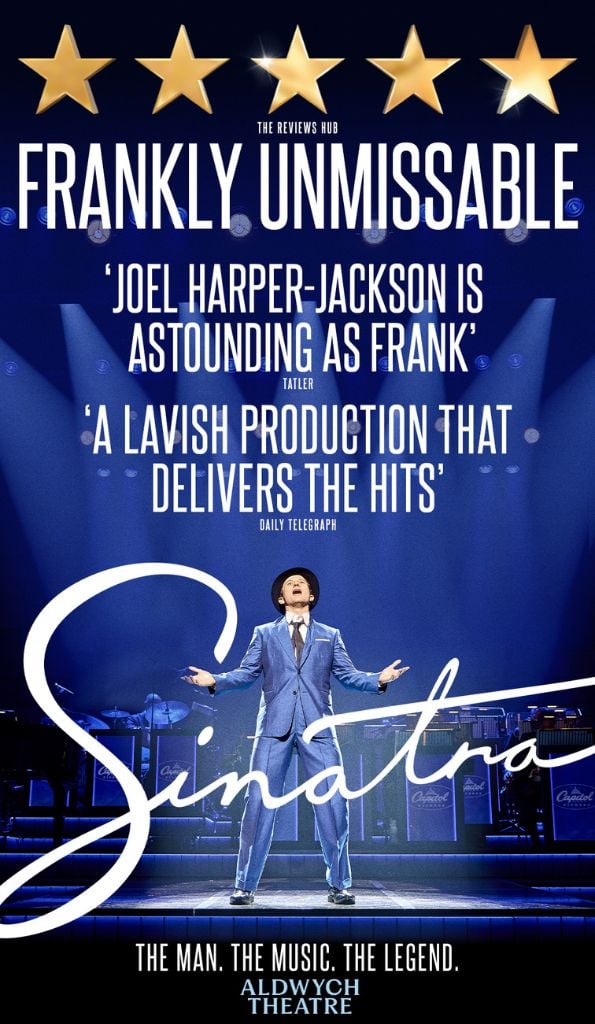
Sinatra the Musical is presented at the Aldwych Theatre in London’s West End, which makes location part of the decision. For visitors already arranging an evening in the area, the production can anchor a broader night out. For those travelling specifically for the show, the performance time, journey and venue access all deserve attention alongside the story itself.
The official ticket information page gives the venue address and describes the current booking window. Since schedules can change, confirm the listing for your selected performance before arranging travel. The official availability calendar is the useful companion for seeing which dates are offered through the direct route.
In review terms, the production’s strongest case is a familiar catalogue attached to a legible rise-and-fall biography, with an official booking setup that gives readers distinct ways to approach seats. Its open question is artistic execution: the written description cannot tell us whether the dramatic transitions, performances and staging land with the force the premise suggests. Readers who need that certainty may want to consult current audience or professional coverage before committing.
Is Sinatra the Musical right for a song-led West End evening?
Our recommendation is to consider Sinatra the Musical if you enjoy familiar standards, theatrical biography and a story that connects a performer’s public success with private relationships. Its published premise is clear, the song catalogue is a strong point of entry, and official ticket information gives a sensible route for comparing dates, seats and access details.
The limitation is equally clear: promotional information cannot establish the production’s pacing or dramatic depth, and a popular song list alone is not a guarantee of a satisfying musical. Review the official seat options for your date, check access requirements directly, and seek independent performance coverage if staging quality is central to your decision. For the right listener, it looks like a considered West End choice; for someone seeking a concert or documentary, it may not be the closest match.