

A research-led look at the ready-made and build-your-own gifts, the details that make them useful, and the recipients who may prefer a simpler gesture.
A bouquet can be a lovely gesture, but it does not always answer the practical question behind a gift: what might make this person’s day a little easier or more comforting? Don’t buy her flowers builds its range around that question, offering curated boxes and the option to assemble a more personal selection.
We reviewed the UK store’s product information, delivery notes and range structure. The result is a brand with a clear point of view and some thoughtful specifics, alongside a real decision for the sender: selecting a box asks you to make a judgement about what the recipient will enjoy.
Heads-up: we earn a commission from some links in this article. It never changes the price you pay.
What you need to know
- The Mini Cancer Care Gift Box keeps the gesture compact, with hand cream, a self-heating eye mask and lip balm.
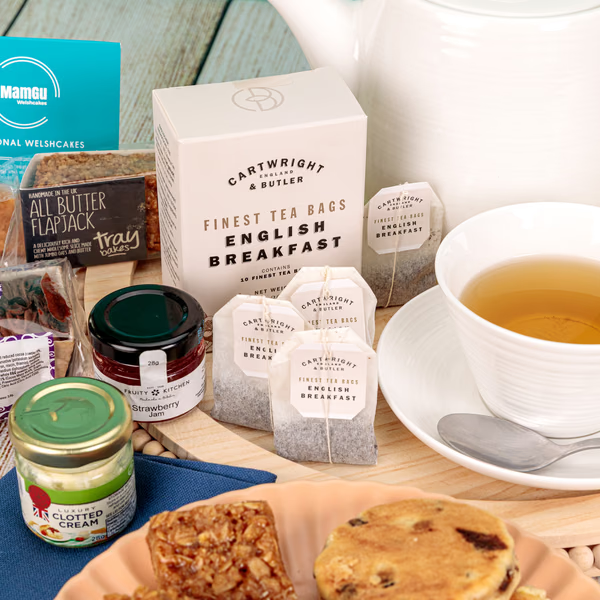
- The Mini Afternoon Tea Hamper offers an individual treat with Welsh cakes, jam, cake, flapjack, tea and clotted cream.
- Create a Relaxing Gift Box gives senders room to build around calming, sleep and body-care options.
- Gift wrapping and a personalised handwritten message are part of the brand’s offer across its packages.
- Choice is the main advantage and the main consideration: a tailored gift needs more knowledge of the recipient than a conventional bouquet.
Ready-made boxes give a specific reason for the gift
The clearest strength of Don’t buy her flowers is that its boxes are organised around situations rather than simply around a product category. That makes a care gift feel more considered at the point of selection. For a recipient who might appreciate gentle, useful comforts, the The Mini Cancer Care Gift Box is a focused example. The product page lists Nursem Caring Hand Cream, a Spacemasks Self Heating Eye Mask and Soap Folk Rose Lip Balm.
Those are practical self-care items in a compact set, rather than a generic assortment. Readers weighing a ready-made option can also compare it with the Create a Relaxing Gift Box, which gives more room to match the recipient’s preferences, or the Mini Afternoon Tea Hamper, which shifts the gesture towards food. That specificity can make the gesture of quiet support easier to communicate. The limit is equally clear: a box centred on personal-care products will not suit someone who avoids scented cosmetics, prefers food, or would rather choose their own treats. It is worth checking the recipient’s preferences before assuming that care-themed automatically means right for them.
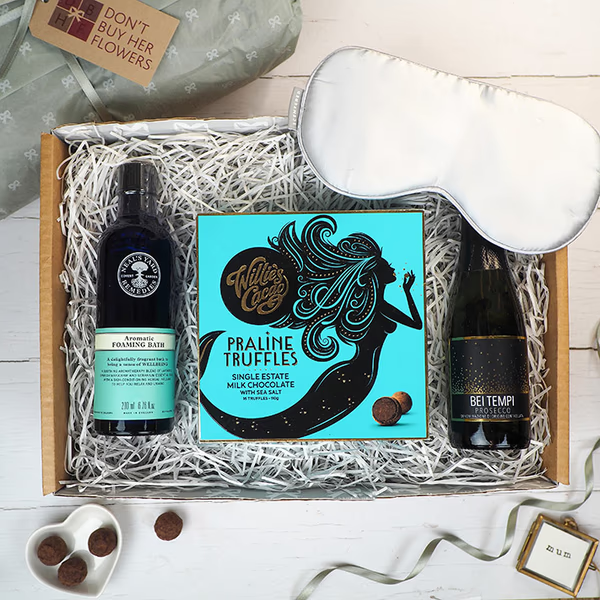
For comfort without the same health-specific framing, the Create a Relaxing Gift Box is a flexible route. Its page describes a bespoke box built around calming, sleep and soothing weary bodies. That makes the idea adaptable, while leaving the sender responsible for choosing the actual items. A ready-made set is faster to interpret; a custom selection can feel more personal if you know what the recipient likes. The Mini Cancer Care Gift Box is the clearest low-decision example, while Create a Relaxing Gift Box makes more sense when you can curate around known preferences.
- Choose the Mini Cancer Care box when a small, personal-care-led gesture fits the context.
- Choose a relaxation build when you know which kinds of comfort the recipient prefers.
- Pause before sending skincare or food if allergies, sensitivities or dislikes are unknown.
Food hampers make the gift easier to share or enjoy
Food is a useful counterpoint to the care boxes because it turns the gesture into a small occasion. The The Mini Afternoon Tea Hamper lists Mamgu Traditional Welsh Cakes, mini strawberry jam, mini chocolate cake, a single flapjack, Cartwright & Butler English Tea and English clotted cream. The mix gives the recipient a ready-made tea break, with a clear balance of sweet items and tea. In that sense, the Mini Afternoon Tea Hamper has a more defined use than a general gift box: it is an invitation to pause with familiar treats.
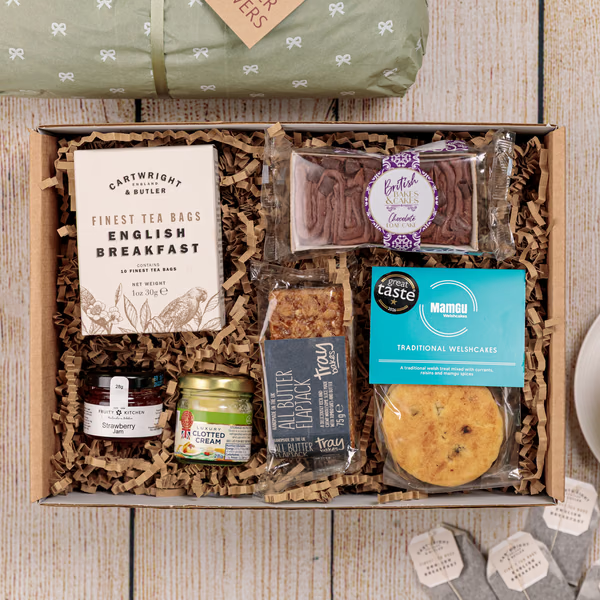
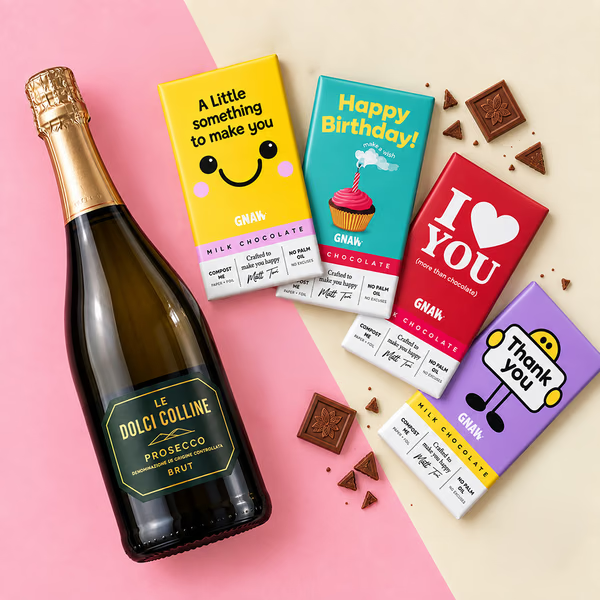
That specificity is useful for someone who enjoys classic tea-time treats, but it narrows the audience: dietary requirements and personal tastes matter, and the product information directs shoppers to separate ingredient and allergen details. Check those details rather than infer suitability from the hamper name. For a more celebratory mood, The Prosecco & Chocolate Hamper combines two familiar treats, though it is only an obvious fit when both suit the recipient. A food-led alternative like the Mini Afternoon Tea Hamper avoids the alcohol question, but still calls for an ingredient check.
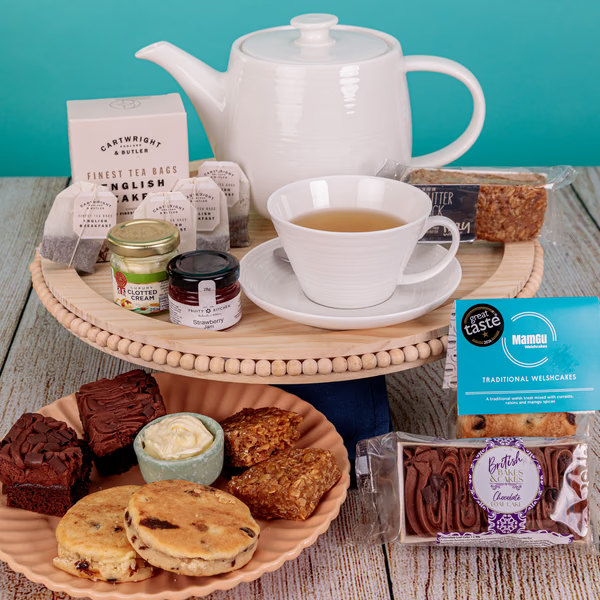
Compared with flowers, these gifts have more immediate use and a stronger sense of occasion. The Mini Afternoon Tea Hamper is the clearest example of a gift that becomes an activity, while The Prosecco & Chocolate Hamper signals a celebration more directly. They also ask more of the sender: food preferences, allergens and whether alcohol is welcome become part of the decision. The store’s product descriptions help identify what is included, but readers should use the live product page to check the current contents and delivery options before placing an order.
Wrapping and delivery reduce some of the sender’s work
Presentation is one of the brand’s practical strengths. The store says gift wrapping and a personalised handwritten message are included across its packages, so the sender does not need to arrange those finishing touches separately. That supports the brand’s central idea: the item and the note work together as one gesture. The product imagery also shows the gifts as arranged packages, which helps set expectations about presentation.
Delivery needs a separate check. The store lists different delivery methods and timing conditions, including cut-off times and exclusions for some days. These details can change, so we would confirm the options shown for the chosen item and destination at checkout. This is especially relevant when the gift is connected to a particular moment. Confirm the date in the order flow before relying on a delivery label.
The range also asks for more interpretation than a single bunch of flowers. A recipient may not want a box of bath and body products, or may not be able to eat a hamper’s contents. That is a preference check, not a flaw in the concept. But it is why the bespoke option will suit thoughtful senders who know their recipient better than people seeking a completely neutral, low-decision gesture.
The choice is thoughtful, with a preference check attached
Our review finds that Don’t buy her flowers has a coherent strength: it translates the vague idea of “sending support” into recognisable choices, from a compact personal-care set to a tea hamper or a build-your-own relaxation box. Product pages outline contents, while wrapping and a message complete the delivery.
The main limitation is the same specificity that makes the products compelling. A well-chosen box can feel more personal than a default bouquet, but only when the sender has a reasonable sense of the recipient’s tastes, dietary needs and comfort with personal-care items. We recommend the brand for people who want a practical, occasion-aware gift and can make that preference check. If you need the safest possible option for someone whose tastes are unknown, a simpler gesture may be easier to get right.
Will a Don’t buy her flowers box suit the person you have in mind?
Choose Don’t buy her flowers when you can connect a specific box to what the recipient enjoys: the Mini Cancer Care Gift Box for practical comforts, the Mini Afternoon Tea Hamper for a classic treat, or Create a Relaxing Gift Box when personal selection matters. If you are unsure about personal-care preferences, the Mini Afternoon Tea Hamper may be a more familiar direction; for a bespoke route, revisit Create a Relaxing Gift Box. Food and self-care gifts are not universal; check contents, allergens and delivery details.