

A clear look at how the Prudential Tower observatory combines skyline views, interactive city exhibits and Stratus into one visit, with context for deciding whether it fits a first Boston itinerary.
View Boston is designed as more than a high-floor lookout. The attraction occupies three levels of the Prudential Tower, linking indoor and outdoor panoramas with exhibits that help visitors read the city below. For a first-time reader, the useful question is how those pieces fit together and whether the visit is primarily sightseeing, orientation or a social stop.
We reviewed the brand’s published experience and ticket information. The strongest idea is the sequence: start with the skyline, move into interactive interpretation, then choose whether to linger over a drink at the rooftop bar.
Heads-up: we earn a commission from some links in this article. It never changes the price you pay.
What you need to know
- View Boston Observation Deck spans three levels inside the Prudential Tower, with indoor and outdoor viewing areas.
- Boston 365, Explore Boston and Open Doors bring exhibits and neighborhood discovery into the visit.
- General Admission is the core experience; Flex General Admission adds date flexibility.
- Sips & Sights Experience pairs the observatory with one beer, wine or signature cocktail at Stratus.
- ViewPrint, group visits and event spaces show how the brand stretches beyond individual sightseeing.
View Boston turns the skyline into a starting point
At 800 Boylston Street, within Prudential Center, the brand places its main attraction in a recognizable part of central Boston. Visitors ascend to the 52nd floor for the indoor panorama, then can continue to the 51st-floor Cloud Terrace, an open-air deck with views and local art. The arrangement matters: weather and comfort can change how long guests prefer to stay outside, while the indoor level keeps the skyline view available in a more sheltered setting.
The official description calls this a three-level immersive experience. That framing is more useful than treating it as a single observation platform. One level emphasizes the broad city view, another adds outdoor atmosphere, and the lower exhibit areas encourage visitors to look for landmarks and neighborhoods. For anyone mapping a first visit, the General Admission page describes access to indoor and outdoor decks, interactive experiences and Stratus rooftop bar.
This is the central editorial appeal: View Boston makes the vertical perspective legible as a beginning to exploring the city, rather than an isolated photo stop. It is particularly relevant when a visitor wants a broad orientation before choosing neighborhoods to explore at street level.

Readers comparing ticket formats should focus on the planning difference rather than expect separate attractions. The core view and exhibits anchor the visit; flexibility or a drink add distinct practical value. Visitors can review the General Admission option before choosing. The brand lists General Admission as its standard route into the experience.
Interactive exhibits connect the view to city life
A panorama can be beautiful and still leave a first-time visitor unsure what they are seeing. View Boston addresses that familiar limitation with interpretive features. Boston 365 uses a three-dimensional model to present the city through its celebrations, seasons and local character. Explore Boston lets guests browse neighborhoods and save attractions, restaurants and activities to a personalized itinerary.
Open Doors adds a 270-degree immersive theater presentation focused on Boston neighborhoods and attractions. The shared purpose is orientation: these features can turn a skyline into a set of places and possible next stops. They are not a substitute for independent neighborhood research, but they give the observatory a more active role in a visitor’s day.

Visitors can also read about the View Boston Observation Deck experience before planning the visit. The brand also promotes ViewPrint, a system for saving ideas from its discovery displays into a personal plan. The site describes a range of things to do that visitors can scan and save. For a traveler who prefers to improvise, that feature may be optional; for someone trying to turn a broad view into a workable shortlist, it gives the exhibits a practical continuation.
- Boston 365 frames the city through its changing seasons and events.
- Explore Boston helps surface neighborhood interests and potential stops.
- Open Doors presents a wide-screen introduction to local places.
- ViewPrint keeps selected ideas together as a personalized itinerary.

We see this as the brand’s clearest point of difference from a simple elevated viewpoint: the exhibits are intended to make the visit useful before and after the photo moment. Its value will depend on how much a guest enjoys interactive interpretation, since a visitor seeking only a quick skyline snapshot may not need the added layers.

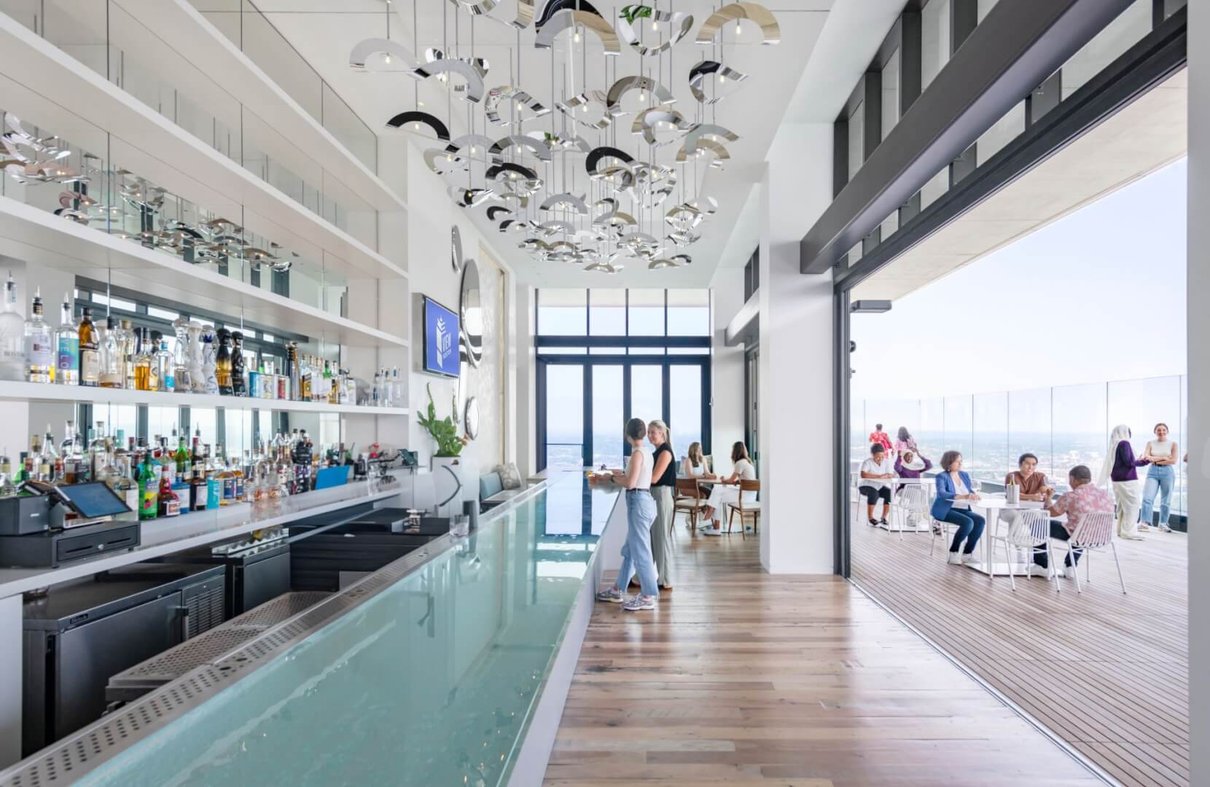
View Boston describes its visitor journey as continuing through the outdoor deck and Stratus, its rooftop bar. The ticket range gives that social element different emphasis. The Sips & Sights Experience includes the broader View Experience plus a beer, wine or signature cocktail. See the listed Sips & Sights details for the current description. The site presents that inclusion plainly, making it a natural fit for visitors who want the observation visit to feel like a planned pause rather than a quick stop.
By contrast, Flex General Admission addresses scheduling uncertainty. The Flex General Admission listing is the place to confirm its current booking terms. That distinction can matter when a city itinerary depends on weather, arrival time or a group’s changing pace. The General Admission format remains the uncomplicated reference point for visitors whose date is settled and who want the core attractions.
There is a limitation to keep in view: these formats share the same central observatory, so the choice is about flexibility and an included beverage rather than a wholly different view. Check the regional ticket page for current inclusions and booking terms. Visitors should confirm current hours, entry details and booking terms on the regional ticket page before setting the surrounding itinerary.

The brand makes room for groups and private events
Beyond individual tickets, View Boston presents itself as a venue for group outings, school visits and private gatherings. The high-level setting is the obvious draw, but the broader product is a managed city experience: guests can move through the decks and exhibits, with the possibility of pairing a gathering with the rooftop bar. This makes the brand relevant to planners choosing a shared activity as well as tourists.
The View Boston Observation Deck collection presents group bookings and event spaces as separate pathways. Details for General Admission remain the relevant starting point for individual visits. The public site lists group bookings and event spaces as separate pathways. Its exact availability and arrangements depend on the occasion, so prospective organizers should treat those as planning inquiries rather than assume a standard package. The distinction is useful: View Boston is both a public attraction and a destination that can support hosted occasions, though those needs require checking directly.
For first-time readers, the decision comes down to the kind of city introduction they want. A high viewpoint supplies orientation and memorable scale; the interactive spaces add local context; Stratus can add a social finish. Links to the core admission, flexible admission and Sips & Sights show how those choices map to different plans.
- Choose the core ticket for a settled, view-focused visit.
- Consider Flex when scheduling uncertainty matters.
- Add Sips & Sights when the rooftop drink is part of the occasion.
Our recommendation is to consider View Boston when a first visit would benefit from a bird’s-eye introduction and a structured way to explore Boston’s neighborhoods. Its honest limitation is that the ticket adds a dedicated attraction to the itinerary, and guests who want only a fleeting view may find the exhibits more than they need.
Is View Boston Observation Deck a useful first introduction to the city?
For visitors who enjoy combining a panorama with interpretation, the brand has a coherent proposition: three levels, interactive city context and an optional rooftop drink. It is less essential for a tightly scheduled itinerary centered on street-level neighborhoods alone, but the exhibits and ViewPrint tools give it a credible orientation role.
Choose a ticket format around the date certainty and whether a drink is part of the occasion, then check the current regional listing for precise details. That keeps the decision grounded in what the brand offers while leaving room to shape the rest of the Boston day.