

A concise introduction to the Royal Shakespeare Company production, its creative roots and the official performance options that help newcomers plan their first look.
For a first-time visitor, Matilda, The Musical UK NEW is more than a familiar story moved onto a stage. The official UK site introduces a theatrical production with a distinct creative team, a London home and information for audiences who want to understand the show before choosing a performance.
That makes the site useful even before a booking decision. It brings together the story behind the production, material about its people and stage world, and practical information about different ways to attend. We have reviewed the official UK pages and their published descriptions; we have not attended a performance.
Heads-up: we earn a commission from some links in this article. It never changes the price you pay.
What you need to know
- The Royal Shakespeare Company production adapts Roald Dahl, with a book by Dennis Kelly and original songs by Tim Minchin.
- The official UK site places the London production at the Cambridge Theatre in the West End.
- Chilled, captioned and audio described performances provide distinct access routes to explore.
- Production history, cast details, galleries and booking information give newcomers context before they choose a date.
A classic children’s story becomes a distinct stage collaboration
The starting point is recognizable: a resourceful child navigating an adult world that does not take her seriously. The stage version’s identity comes from the way several creative voices shape that premise. The official production credits Dennis Kelly with the book and Tim Minchin with the original songs, placing dramatic writing and music at the centre of the adaptation. The official creative credits are a useful entry point for readers curious about how the stage version was shaped.
That pairing matters to a new reader because it signals that the show is not simply a sequence of familiar scenes. A musical needs to move between dialogue, character and song; its book and score determine how those changes work together. The UK site’s production information gives readers a starting point for following that collaboration, while the official story overview frames the source material and theatrical retelling.
The Royal Shakespeare Company is the producing organisation behind this production. That credit identifies the creative home and gives the production a clearer institutional frame than a bare ticket listing, while leaving the experience of a particular performance for the stage itself.

For readers comparing adaptations, this is the most meaningful first distinction: the stage version has its own authorship. The official creative and production pages can help audiences explore that background, and the show history places the current London presentation within a longer production story.
The production’s range is visible across its people and stage imagery
A brand introduction should explain what a visitor can actually explore. Here, the official site’s range extends beyond the booking path: readers can look through cast and production material, revisit the show’s history, and see how a large ensemble helps carry the story. Those elements matter because they help a first-time audience form a picture of the production before deciding whether it suits their theatre plans.
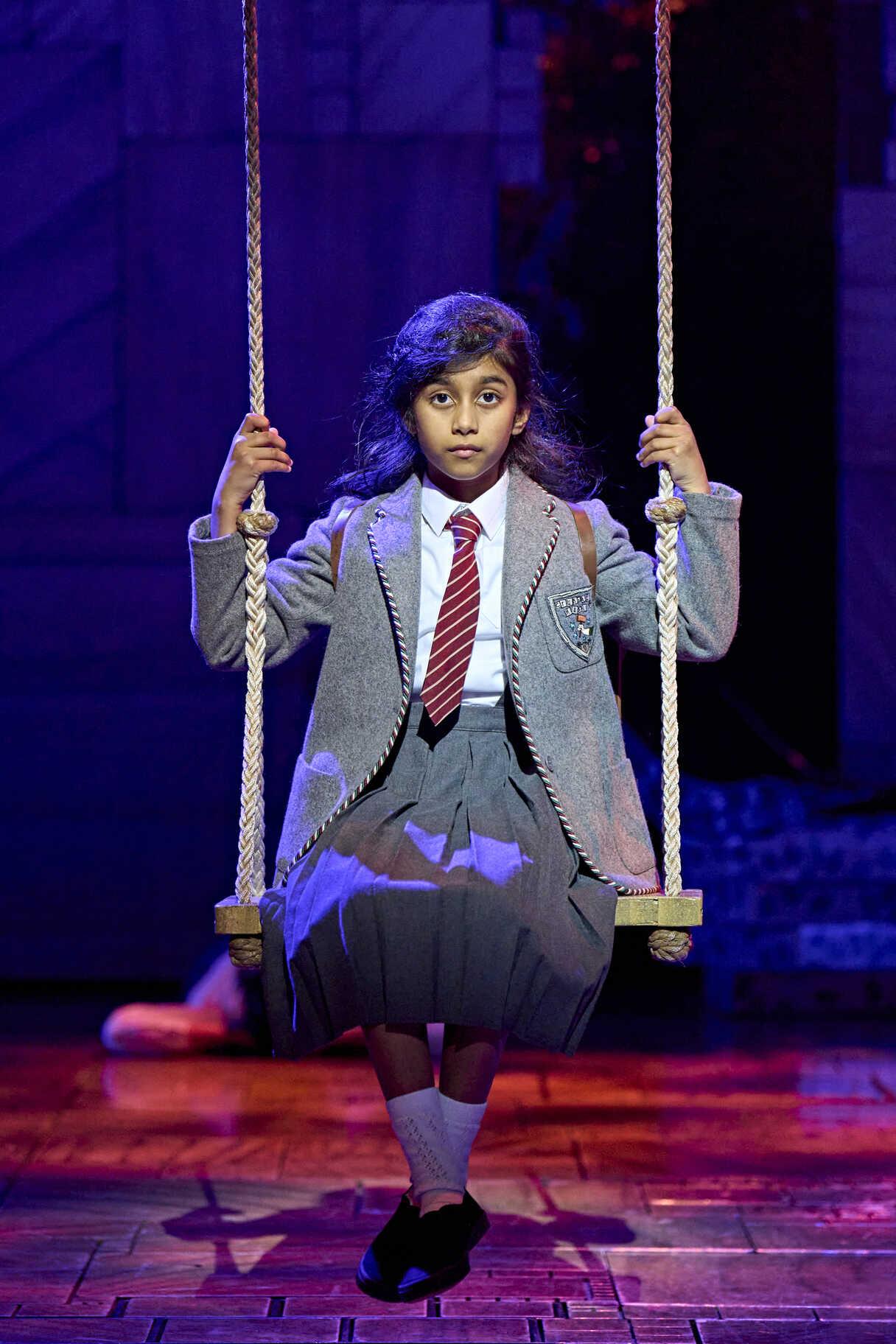
The official gallery makes the theatrical scale more legible. Stage images can show the ensemble, costumes and visual composition in a way that a short synopsis cannot. The production photography is official editorial material, so it offers useful context about the show’s presentation while remaining a selected view rather than a complete account of the live experience.
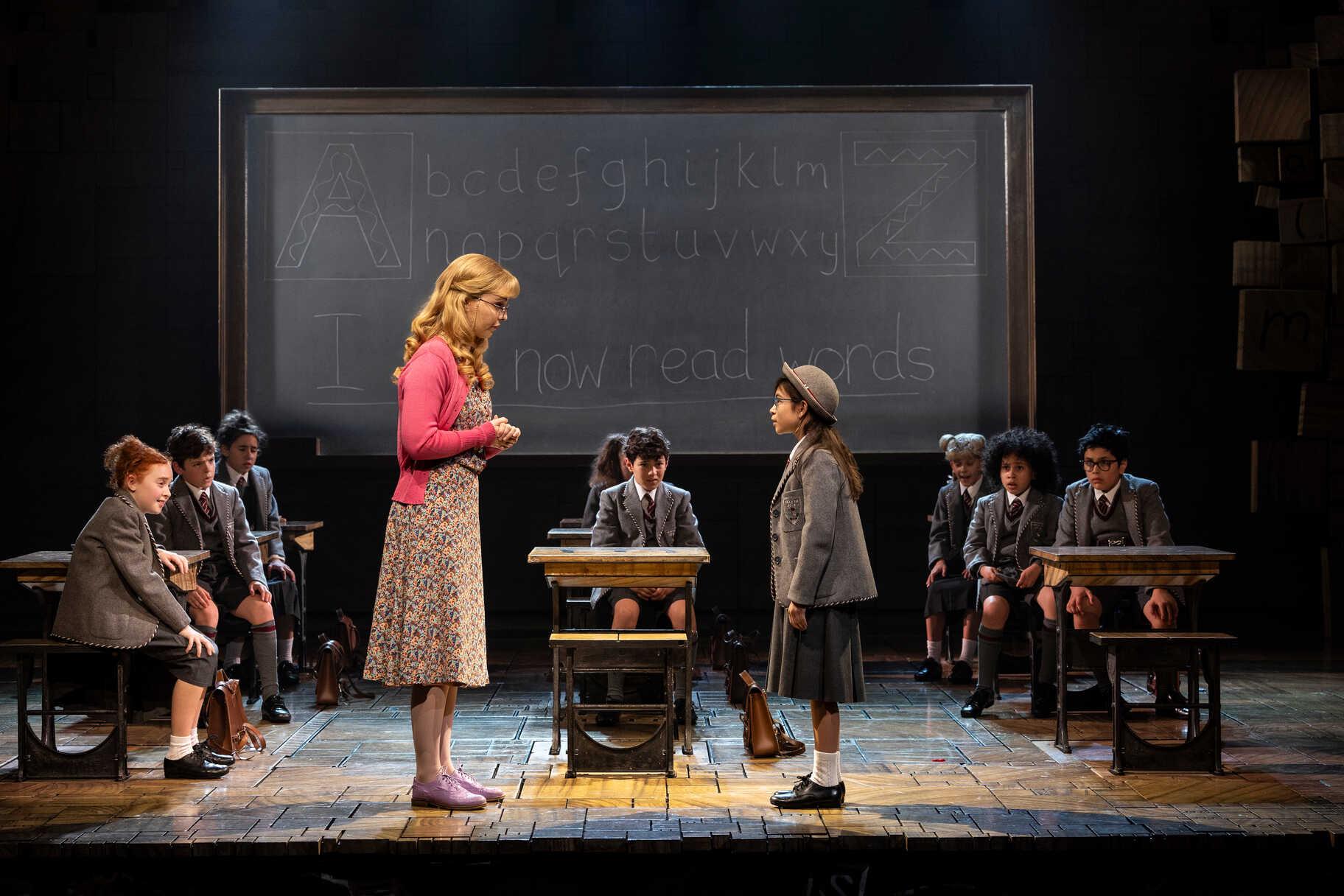
Costume and casting are also part of the brand’s story. The show centres a young protagonist and a broad company of performers, which makes the official cast information especially relevant for readers who want to follow who is appearing. Cast details can change, so it is sensible to consult the current official listing rather than treat a gallery caption as a guarantee of a particular performance.
The official experience includes more than one way to attend
The UK site presents the London production at the Cambridge Theatre and gives audiences more than a standard performance route to investigate. Its assisted performance pages describe chilled performances, captioned performances and audio described performances. These are not interchangeable labels; each points to a different audience need, so readers should check the details for the date and format they are considering.
A Matilda The Musical Chilled Performance is presented as an option for a more flexible auditorium environment. The official chilled event page is the right place to read what that means for the specific event and what arrangements are in place. For someone planning with a child or audience member who may benefit from a less conventional setting, that information can be as important as the show description itself.
The Matilda The Musical Captioned Performance offers captioning as part of the performance format. Visitors who rely on written access to spoken material can investigate the official captioned schedule and event details. Availability is date-specific, so the general page is a useful orientation but not a substitute for confirming the particular performance listing.
For audiences who benefit from spoken visual context, the Matilda The Musical Audio Described Performance provides a further option to explore. The audio described event listing can clarify how the format is arranged and which dates include it. Across all three, the practical lesson is the same: identify the audience’s needs first, then check that a suitable date is available through the official route.

The brand gives newcomers a useful route into the show
For someone who has never encountered the production, a good first step is to follow the site in layers. Begin with the story and creative credits to understand the adaptation; look through the official imagery for a sense of the stage world; then review current cast and performance information. This sequence helps separate the show’s creative identity from the practical decision about when and how to attend.
- Start with the story: read the official overview and note the production’s connection to Roald Dahl.
- Meet the creative team: use the credits to understand the roles of Dennis Kelly and Tim Minchin.
- Explore the stage world: browse the official gallery and production history for context.
- Plan around access: check whether chilled, captioned or audio described dates fit the audience.

There is a limitation to keep in view: a website can explain credits, formats and booking choices, but it cannot fully convey the energy, pacing or audience atmosphere of a live performance. Images and descriptions are carefully selected, and the official pages are strongest as a guide to the production’s structure and practical options. Readers looking for a personal account should seek one elsewhere; this feature stays with what the official UK pages state.
We see the brand’s clearest value in this combination of creative identity and useful audience information. The source story is recognizable, the book and score give the adaptation a defined authorship, and the official site gives prospective visitors a way to investigate the production before committing to a date. Its access pages add substance to that introduction by making distinct performance options visible.
Is Matilda, The Musical UK NEW a good first West End show?
For a reader drawn to a story-led musical with a clearly credited creative team and practical official information, Matilda, The Musical UK NEW is worth investigating. We recommend beginning with the story and creative pages, then checking current cast, performance details and any access requirements on the official UK site.
The main limitation is that the site’s imagery and descriptions cannot promise how a particular performance will feel, and special formats depend on the date. Treat the official pages as a strong planning resource, confirm the details for the performance you want, and use the booking route when you are ready to compare availability.