


We examine Feather & Black’s design language, named furniture and buying support to see which bedroom shoppers the range genuinely suits.
A bedroom purchase can begin with a bed, but it rarely ends there. The frame sets the scale, storage solves the practical problem and the finish determines whether the room feels coherent. That makes a broad specialist retailer worth reviewing as a system, not just as a catalogue.
Our question is simple: does Feather & Black offer enough design distinction and useful service to justify starting a bedroom project there, and where should a careful shopper be more demanding?
Heads-up: we earn a commission from some links in this article. It never changes the price you pay.
What you need to know
- The range is strongest when solid wood, weathered finishes and upholstered details need to work together.
- Sienna Beau suits a softer statement bed, while Jacob offers a more architectural solid-wood look.
- Lydia and Adina show the practical side of the range through drawers, compact profiles and storage-led design.
- Delivery, assembly, samples and the mattress trial add useful buying support, but room access and finish variation need checking.
Feather & Black builds bedrooms around material and proportion
The store’s clearest strength is a consistent material vocabulary. Feather & Black works across weathered oak, natural linen, darker wood, metal and upholstered forms, so a shopper can build a room without forcing every piece into the same finish. The wider bed collection also separates styles such as wooden, metal, upholstered, ottoman and storage beds, which is useful when the practical brief comes before the aesthetic one. That is a genuine range advantage for a whole-room project.
That breadth is helpful, but it creates a responsibility for the reader. Finish names, bed sizes, headboard shapes and storage mechanisms change the visual weight of a room. We would start with the bed buying guide, then check whether a chosen bedside or chest belongs to the same visual family rather than relying on a collection name alone.
- Natural materials: oak and wood-led pieces bring visible grain and finish variation.
- Useful contrast: linen, metal and painted finishes prevent the range becoming one-note.
- Room scale: low foot ends and compact furniture can matter as much as headline style.
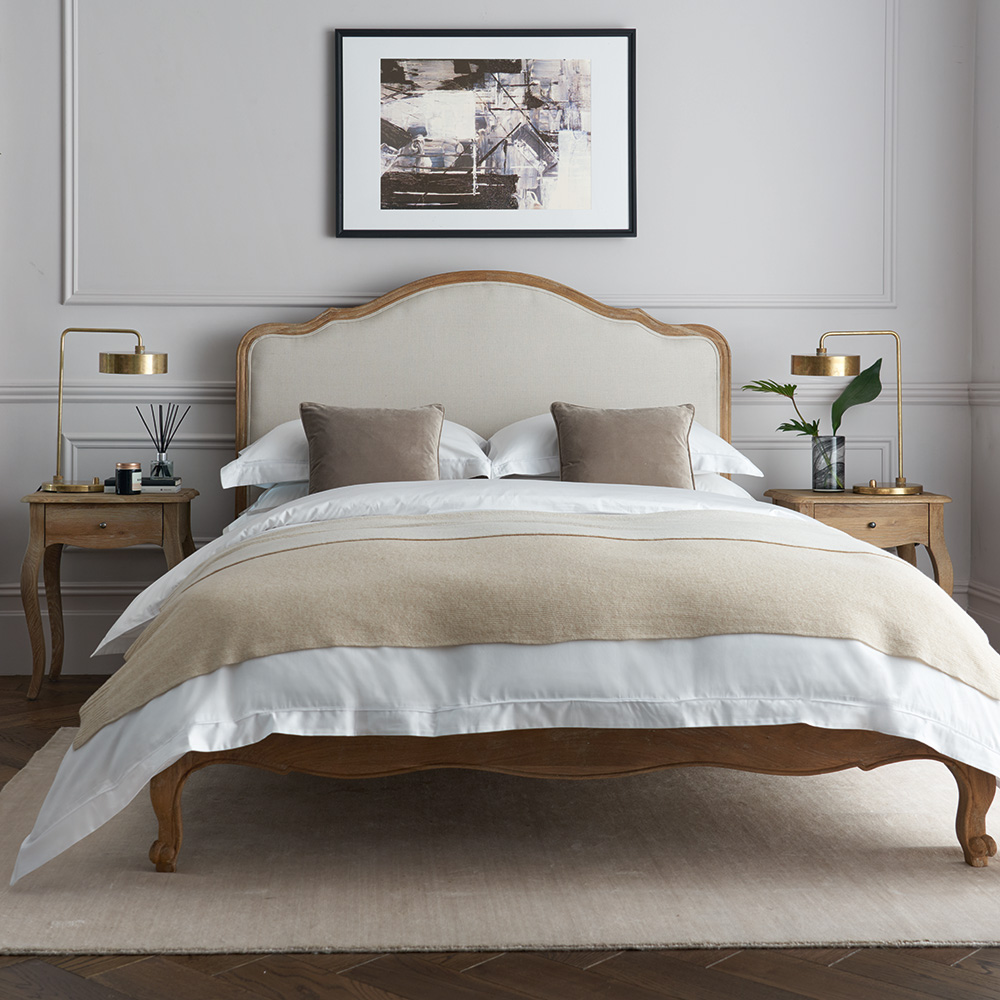
The most persuasive example is the Sienna Beau Linen Bed. Its French-inspired headboard is upholstered front and back in a natural linen blend, while the store describes the frame as solid weathered oak with carved cabriole legs. The low foot end is a practical detail for rooms where circulation matters. The trade-off is scale and delivery planning: a substantial bed still needs a clear route into the property.
Sienna, Jacob and Oliver cover different bed briefs
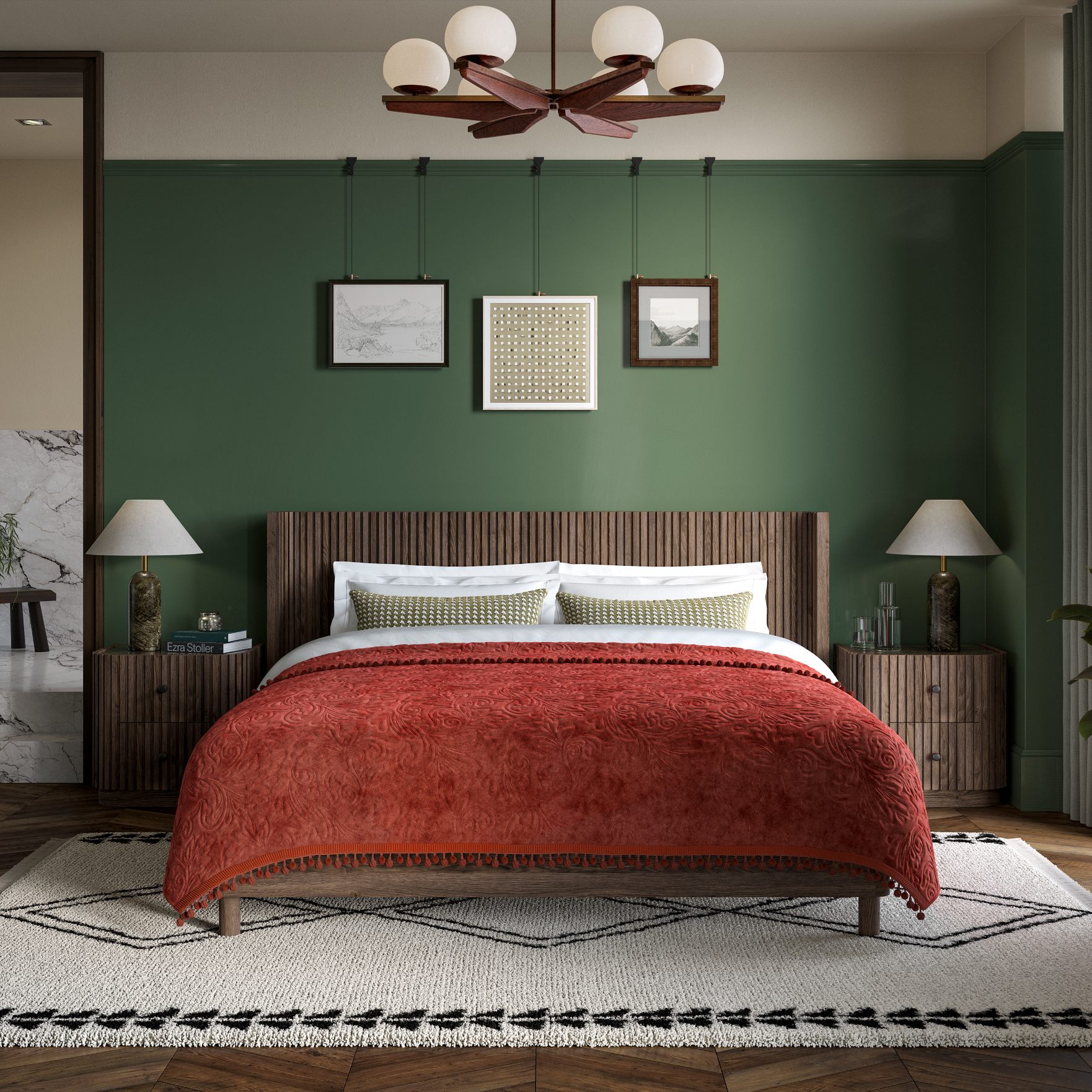
A review of the bed range becomes more useful when the models are separated by room brief. Sienna Beau is the softer, more decorative route. The Jacob Bed is more architectural: Feather & Black describes a solid-wood frame, a slatted winged headboard, deep side rails and wooden sprung slats. Those details make it a better match for someone who wants a structured focal point without a tall upholstered surround.
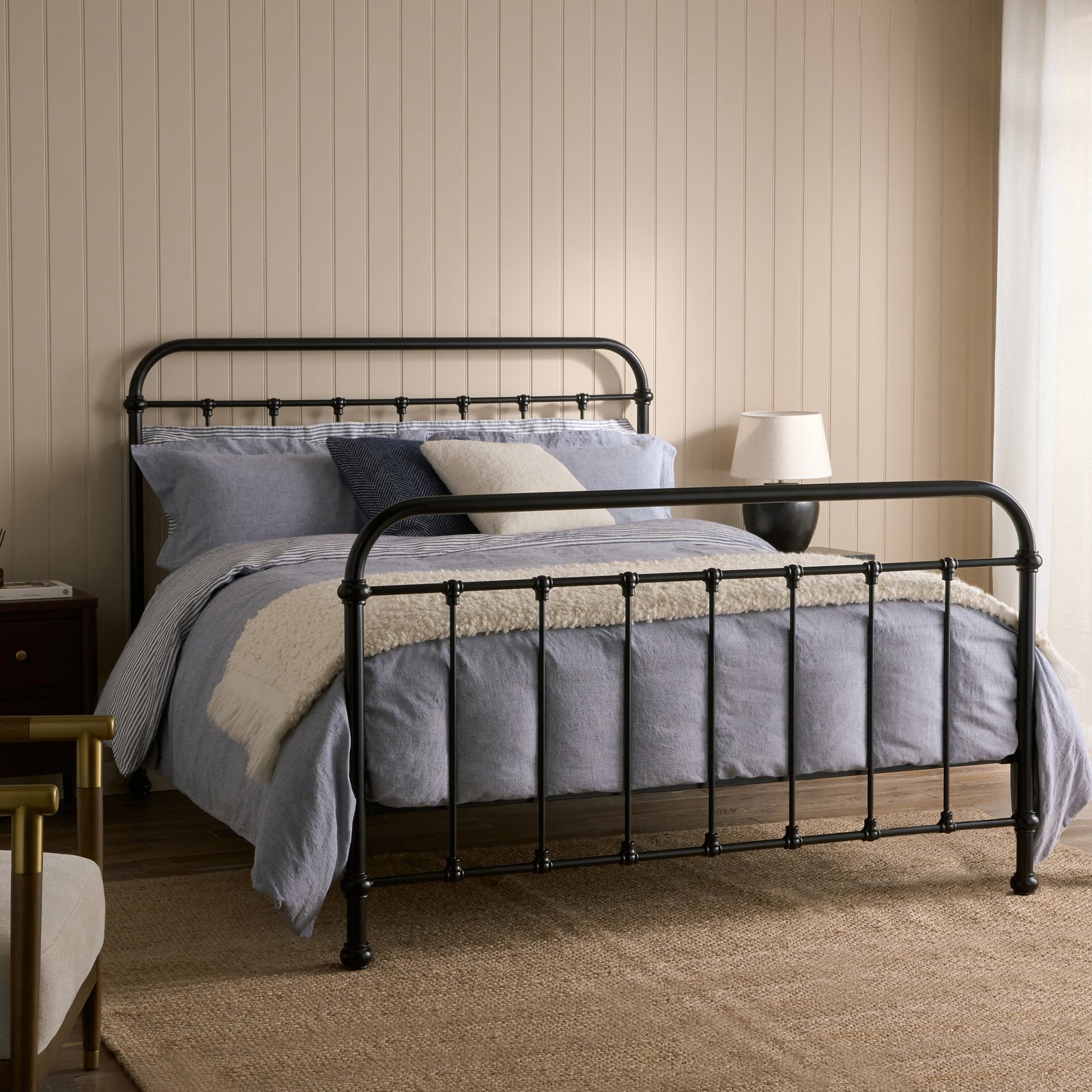
The metal bed collection, including the Oliver Bed, offers another useful change of pace. An open metal frame can leave more wall and floor visible than a deep upholstered design, although it will not provide the same padded softness or visual quiet. That is the kind of limit a good review should make clear: Feather & Black has variety, but no single construction suits every bedroom.
Across these choices, check the exact size, clearance, slat specification, finish and assembly information on the individual product page. The store states that handcrafted finishes can vary, so a weathered oak piece should be treated as individual rather than perfectly uniform.
- Choose Sienna when a linen-led, softer centrepiece matters most.
- Choose Jacob when solid wood, structure and a lower visual profile are priorities.
- Consider Oliver when an open metal silhouette suits the room better than upholstery.
Lydia and Adina make the practical case for the range
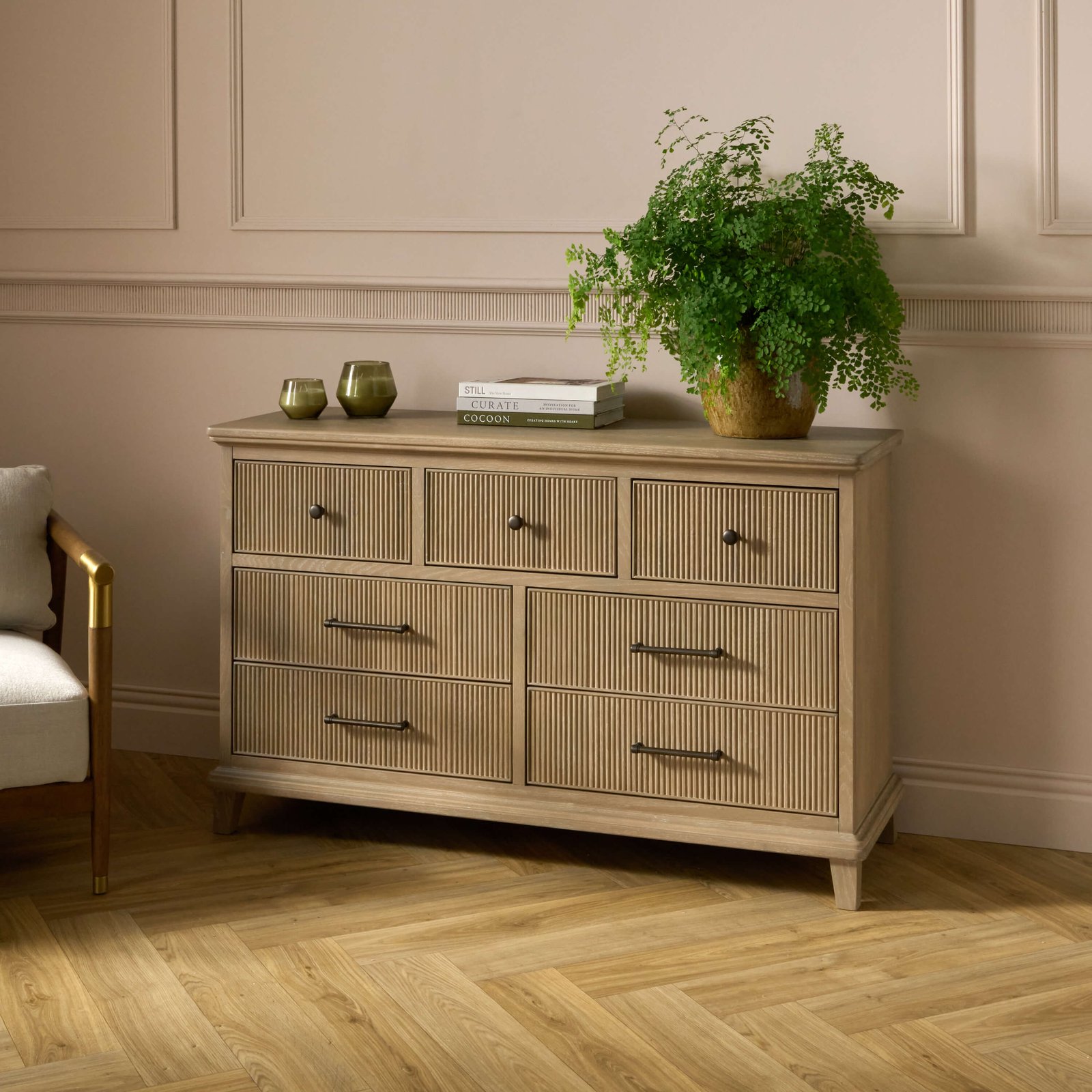
Beds attract attention, but bedroom furniture is where the retailer’s everyday usefulness becomes clearer. The Lydia 7 Drawer Wide Chest has three smaller drawers and four wider drawers, grooved fronts, metal handles and soft-closing drawers according to the product page. Traditional wooden runners, drawer stops and solid wooden feet add a practical construction story beneath the grey wash finish. That is storage with real specification, not just a decorative front.
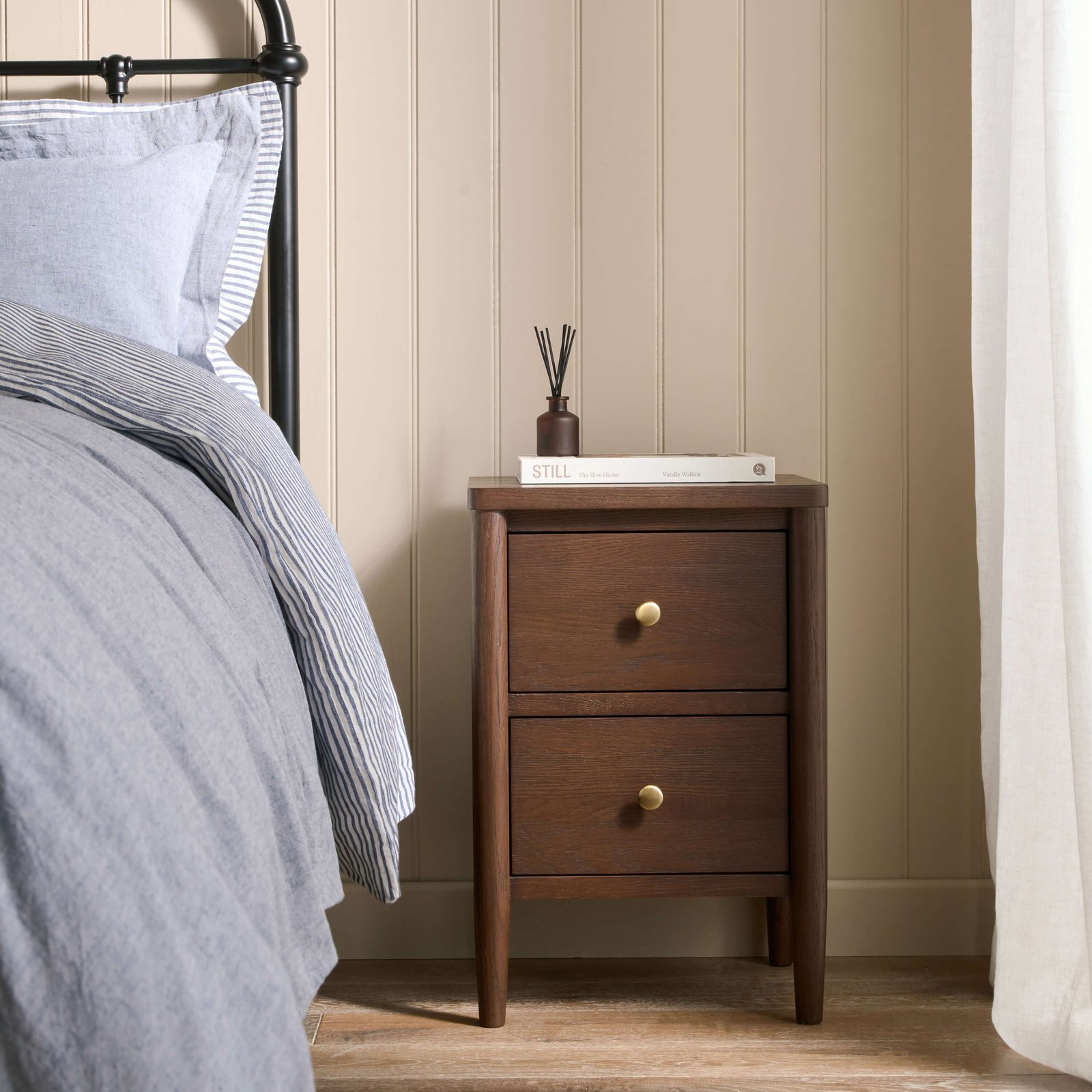
For a smaller room, the Adina 2 Drawer Bedside is a more targeted proposition. Feather & Black describes a narrow profile, two drawers, metal handles, rounded corners and peg legs, with a weathered red oak and wood composite construction. It is not a substitute for a full storage plan, but it shows the brand understands that compact furniture has to earn its footprint.
The limitation is that storage furniture is room-dependent. A wide chest needs wall length, delivery access and a plan for opening drawers comfortably. Use the store’s bedroom storage pages as a shortlist, then measure the room and route before ordering.
The buying support reduces some of the risk
Large furniture is not a low-friction purchase, so service details deserve equal weight with styling. Feather & Black provides a delivery information page, assembly options, fabric samples and guidance for measuring a home. The brand also advertises a mattress comfort trial, which is a more meaningful support feature for sleep products than a generic returns promise.
We would still treat these as checks, not guarantees. Delivery conditions can depend on road access, staircases, ceiling height and supervision. Assembly may add cost, while samples cannot show every variation in a large piece of weathered wood. The store’s returns information and product-specific terms should be read before a large order is placed.
These are the checks we would make before committing. The overall buying process is considered, but it still rewards preparation:
- Confirm the product’s exact dimensions, finish and package information.
- Measure the full delivery route, not just the bedroom wall.
- Order a fabric sample where upholstery is central to the decision.
- Compare assembly, delivery and returns terms with the size of the purchase.
Is Feather & Black a sensible starting point for a bedroom project?
Yes, for readers who want a coordinated bedroom range with visible materials, distinctive beds and practical furniture rather than a purely anonymous set. Our recommendation is qualified: begin with the bed brief, use Sienna, Jacob or Oliver to define the direction, then add storage only after checking proportion and access. The result can be a coherent bedroom scheme rather than a collection of disconnected purchases.
The limitation is the same strength in reverse. A design-led, substantial piece needs more measuring and planning than a quick replacement purchase, and finish variation is part of the proposition. If that is acceptable, Feather & Black earns a place on the shortlist. If not, the range may feel more involved than the reader needs.